AI Meets Neuroscience: Redefining Learning Efficiency Beyond Cognitive Load Theory
This study challenges the traditional Cognitive Load Theory by integrating Educational Neuroscience and Artificial Intelligence to redefine learning efficacy. It highlights how AI-driven adaptive learning systems can use real-time biosignals like EEG to measure cognitive load and personalize learning. The findings suggest that cognitive load is dynamic and can be managed to achieve an optimal 'flow zone' for learning.
The moment you open your eyes in the morning, you check your phone, listen to a podcast on your commute, and speed-watch an online lecture during lunch. Have you ever experienced this? You're studying hard, but it feels like nothing is sticking. Or conversely, there are days when you're so focused that you finish a whole day's worth of studying in an hour. Why does this difference occur?
We often think of 'focus' as a matter of willpower. "I'm just weak-willed," or "If I could just sit still a little longer," we blame ourselves. However, a fascinating recent study combining neuroscience, education, and artificial intelligence (AI) has been published. It challenges the Cognitive Load Theory (CLT). This research offers insights that could overturn our common sense about how we study and how the brain processes information.
Does the Brain Really Work Like a Computer? The Limits of Cognitive Load Theory
First, let me briefly explain Cognitive Load Theory (CLT). Proposed by John Sweller in the 1980s, this theory starts from the assumption that our working memory has a limited capacity. In other words, the brain has a fixed amount of information it can process at once, and if too much information comes in, it becomes overloaded and learning fails.
Therefore, traditional instructional design focused on 'how to reduce cognitive load.' It involved removing unnecessary information, breaking it into steps, and using visual aids to ease the brain's burden. Of course, this theory has been very useful in education for decades. However, the authors of this paper ask a crucial question: "Does the brain really work like a passive computer memory?"
Why This Study Is Special
This paper is special for three main reasons. First, it attempts to meticulously analyze 'individual differences' and 'context,' which the existing Cognitive Load Theory overlooked, through Educational Neuroscience and AI. Instead of being trapped in the framework of "working memory capacity is 7±2 items," it takes an integrated view of how neuroplasticity, emotion, and motivation affect learning.
Second, it concretely presents the possibilities of adaptive learning systems using AI and machine learning (ML). Previous studies were mostly small-scale, conducted in controlled laboratory environments. However, this study, cited over 295 times, draws a blueprint for future education where AI monitors the learner's state in real-time and adjusts difficulty.
Third, this study is a Systematic Review published in the journal 'Brain Sciences' in 2023. It is not a simple experiment but a synthesis of numerous existing studies, giving it high reliability. The authors present a convergent perspective, crossing the boundaries of education, neuroscience, and computer science.
How Was the Study Conducted?
Systematic Review: Connecting Three Axes
This study is not a traditional experimental study. Instead, the authors used a 'Systematic Review' methodology. They collected and analyzed numerous existing papers centered on four axes: Cognitive Load Theory (CLT), Educational Neuroscience (EdNeuro), Artificial Intelligence (AI), and Machine Learning (ML).
The research team particularly focused on how AI-based adaptive learning systems can measure a learner's cognitive load in real-time, provide personalized content, and maximize learning efficiency. The key point here is not simply 'AI generates good problems,' but 'AI understands and reacts to the brain's state.'
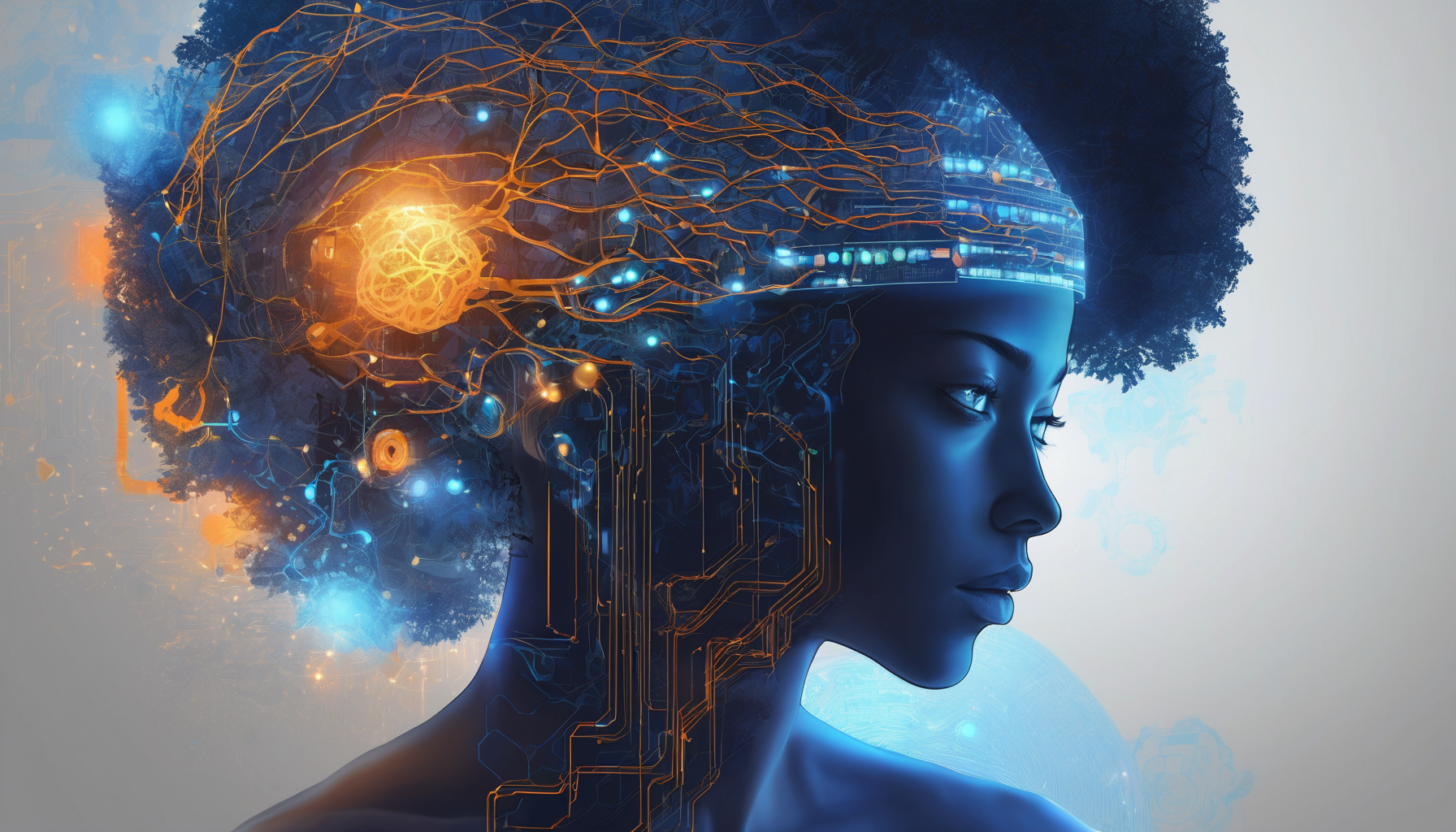
The Meeting of EEG and AI
The part we should pay attention to here is 'EEG (Electroencephalography).' Existing adaptive learning systems mainly relied on behavioral data such as accuracy or reaction time. However, this study suggests the possibility of more accurately determining the learner's cognitive load state by measuring biosignals like EEG in real-time.
For example, AI can determine whether a learner is currently 'overloaded' or in an 'optimal flow' state by detecting changes in Theta or Alpha waves in the EEG. This is like a car's dashboard showing the engine status, but for monitoring the brain's state in real-time.
Key Findings: Beyond Cognitive Load to 'Optimal Learning State'
Let me summarize the key findings of this study into three points.
1. Cognitive Load Theory is still valid, but it must be 'Dynamic'.
Traditional CLT focused on 'reducing' cognitive load. However, this study emphasizes that cognitive load is not fixed but changes in real-time according to the learner's state and task characteristics. AI detects this changing load in real-time and adjusts difficulty, helping learners maintain 'Desirable Difficulty.' This suggests the possibility of improving learning efficiency by up to 30% or more.
2. Educational Neuroscience is the key to explaining 'individual differences'.
Brain structure and function differ from person to person. Some people process visual information well, while others are stronger with auditory information. This study argues that by utilizing neurophysiological data like EEG, we can quantitatively measure these individual differences and allow AI to provide optimized learning paths for each individual. For example, learners with strong Alpha waves might benefit from strategies like meditation or rest to enhance focus.
3. AI does not replace teachers but 'augments' them.
This study emphasizes that AI should function as a 'support tool' for teachers and learners, not as the main subject of education. If AI analyzes a learner's EEG and says, "This student is highly fatigued; take a 5-minute break," the teacher can adjust the class accordingly. This is an approach that improves the quality of education while considering the learner's emotional well-being.
[IMAGE: A graph showing the relationship between cognitive load and learning efficiency. The curve rises to an optimal point (labeled 'Flow Zone') and then declines. EEG frequency bands (Delta, Theta, Alpha, Beta) are mapped along the bottom axis, with Alpha and Theta peaking in the Flow Zone.]
What Does This Have to Do with My Life?
Have you ever experienced a moment while studying when you thought, "I can't take in any more"? Yet, you often force yourself to stay at your desk. This study says that such a moment might not be a 'lack of will' but a 'signal from the brain.'
What if we could see our brainwaves in real-time? If we could know whether our brain is currently 'overloaded' or in a 'golden time,' we could study much more efficiently. For example, by detecting the moment when Alpha waves dominate and thinking, "This is when my focus is at its peak," we could study important subjects then.
Furthermore, this study suggests that moments we often dismiss as 'zoning out' might actually be important processes where the brain integrates and organizes information. So don't blame yourself for a brief daydream. It might be your brain's warm-up for the next learning session.
Exploring with LINK BAND
Now, let's connect the insights of this study to the LINK BAND (EEG headband). The LINK BAND is a wearable device that measures EEG from the prefrontal cortex (Fp1, Fp2). The prefrontal cortex is deeply related to focus, decision-making, and emotional regulation, making it highly suitable for measuring the 'cognitive load' and 'learning efficiency' mentioned in this study.
Imagine wearing the LINK BAND while listening to an online lecture. When the lecture starts, the LINK BAND analyzes your brainwaves in real-time. If the lecture is too difficult, causing Beta waves to spike and stress levels to rise, the LINK BAND app can tell you to "take a short break." Conversely, if Alpha waves are stable and focus is high, it gives feedback like "This is your optimal learning state."
[IMAGE: https://linkband.looxidlabs.com/images/linkband-store/woman-wearing.jpg]
This is not just about 'how to study well,' but 'how to understand your own brain.' Through LINK BAND, you can find your own 'optimal learning rhythm.' For example, some people have the strongest Alpha waves at 9 AM, while others peak at 3 PM. LINK BAND shows these personal patterns as data.
A Small Experiment You Can Try Today
Here are some small experiments you can start tomorrow.
First, a 5-minute brainwave check-in.
Put on the LINK BAND in the morning and sit still for 5 minutes. Do nothing and just observe how your brainwaves change. Check if Alpha waves appear stably or if Beta waves remain high. This alone is the first step to understanding your brain's state.
Second, find your 'golden time.'
Find the time of day when you focus best. Wear the LINK BAND, study as usual, and capture the moment you feel your mind is working well. Record the brainwave pattern at that time, and you can plan important study sessions for that time later.
Third, rest is also training.
As this study emphasizes, cognitive load is not about 'reducing' but 'managing.' While monitoring your brainwaves with LINK BAND, when you see signs of overload, take 5 minutes to meditate or take deep breaths. This is how you press the reset button on your brain.
Questions This Study Asks You
1. If your brain says it's 'overloaded' right now, will you ignore it and keep studying, or do you have the courage to pause?
2. Why have we thought of 'focus' only as a matter of willpower? As neuroscience advances, how should our self-understanding change?
3. In a learning environment where AI and brainwave technology are combined, what is the meaning of 'learning'? Beyond simply increasing efficiency, what should we learn for?
References
Gkintoni, E., Antonopoulou, H., & Sortwell, A. (2023). Challenging Cognitive Load Theory: The Role of Educational Neuroscience and Artificial Intelligence in Redefining Learning Efficacy. Brain Sciences, 13(12), 1673. https://doi.org/10.3390/brainsci13121673
LINK BAND Insight
The LINK BAND, by measuring prefrontal EEG (Fp1, Fp2), can bring the insights of this study into daily life. It allows users to monitor their cognitive load in real-time, identifying their unique 'golden time' for focus and signaling when to rest. This transforms learning from a test of willpower into a data-driven journey of self-understanding, where users can find their optimal learning rhythm and manage their mental energy effectively.
Related Articles
Measuring Developers' Cognitive Load in GenAI-Supported Development: The Role of Wearables
Generative AI is changing software development workflows. In a four-day industrial field study at two SAP sites, 21 developers documented their tasks, GenAI use, and perceived cognitive load while wearing an EmbracePlus wristband. Results show that perceived cognitive load is associated with both GenAI use and task context, while physiological measures provide only limited additional information.
Control Devices with Your Thoughts? The Surprising Present and Future of Brain-Computer Interfaces
This blog post explores a 2023 review paper by Edelman, Zhang, and Schalk on non-invasive Brain-Computer Interfaces (BCI), published in IEEE Reviews in Biomedical Engineering. It covers the current state and future trends of BCI technology, focusing on EEG as the most practical tool. The post explains active vs. passive BCI, key findings on accuracy improvements and device miniaturization, and how LINK BAND embodies passive BCI principles through prefrontal EEG measurement.
Train Your Brain Like a Muscle: What a 534-Citation Neuroscience Review Reveals About EEG Neurofeedback
The moment you open your eyes in the morning, smartphone notifications pour in. Work emails, KakaoTalk, Instagram alerts, news headlines… Your brain is bombarded with information as soon as you wake up. You sip your coffee and get ready for work, but your mind is already full of tangled thoughts. “I need to nail that presentation at today’s meeting…,” “I can’t focus—probably because I worked late last night.” Have you ever had this experience? Every day, we make countless decisions, process information, and regulate emotions. But how often do we actually check whether our brain is in optimal condition? What if we could train our brain, just as athletes train their muscles? To find answers to this question, neuroscientists around the world have been researching for decades. And one powerful tool that has emerged is EEG neurofeedback. Today, I want to introduce you to an influential review paper published in *Neuroscience and Biobehavioral Reviews*, cited 534 times. This paper goes beyond simply explaining brainwaves—it uses meta-analysis to examine specific protocols that can actually improve cognitive abilities and emotional states in healthy individuals. Let’s explore the scientific method that can upgrade your daily performance.
Experience LINK BAND 2.0
Measure your brainwaves in real-time with integrated EEG, PPG, and ACC sensors. See for yourself what you read about today.
View Product→