A Tiny Heart Watcher: On-Device Arrhythmia Detection with TinyML
Nagarajan S, Kurian Polachan. “ArrythML: An Autoencoder-Based TinyML Approach for On-Device Arrhythmia Detection on Resource-Constrained Embedded Systems.” arXiv:2606.02256. View Paper ↗
This blog post dives into a fascinating study where an ultra-compact AI, a mere 180KB in size, accurately detects ECG arrhythmias in just 9 milliseconds directly on an ESP32-S3 chip—without any cloud dependency. This research highlights the significant potential of on-device wearable heart monitoring, emphasizing its low-power consumption and strong privacy safeguards. Join us as we unpack this innovative work in an easy-to-understand and engaging way.
A Small Guardian on Your Wrist
Let's imagine for a moment. You have a tiny device on your wrist. It contains a chip just slightly larger than a fingernail, and this little friend quietly monitors the rhythm of your heart. What's astonishing, however, is that all of this happens without an internet connection, without sending data to cloud servers, and solely within that small chip.
Your heart rate data doesn't flow to some distant data center. It never leaves your wrist. Yet, it can still detect, "Hmm, that last beat pattern seemed a bit off." Like a quiet guardian always by your side.
The research we're introducing today is a story that brings such a dream one step closer to reality. It's a study called 'ArrythML,' published by Indian researchers Nagarajan S and Kurian Polachan. The full title, if we unpack it, is a bit long: 'An Autoencoder-Based TinyML Approach for On-Device Arrhythmia Detection in Resource-Constrained Ultra-Low Power Embedded Systems.' While it sounds complex, the core idea is simple: it answers the question, "Can a tiny chip detect abnormal heart signals without the internet?" with a resounding "Yes, it can."
Why This Research is Special
When we talk about AI these days, we usually envision massive servers, enormous power consumption, and vast data centers. Most of the smart services we use actually rely on powerful computers far away, not just the devices in our hands. That's why if the internet goes down, they stop working, and our data is constantly being transmitted somewhere.
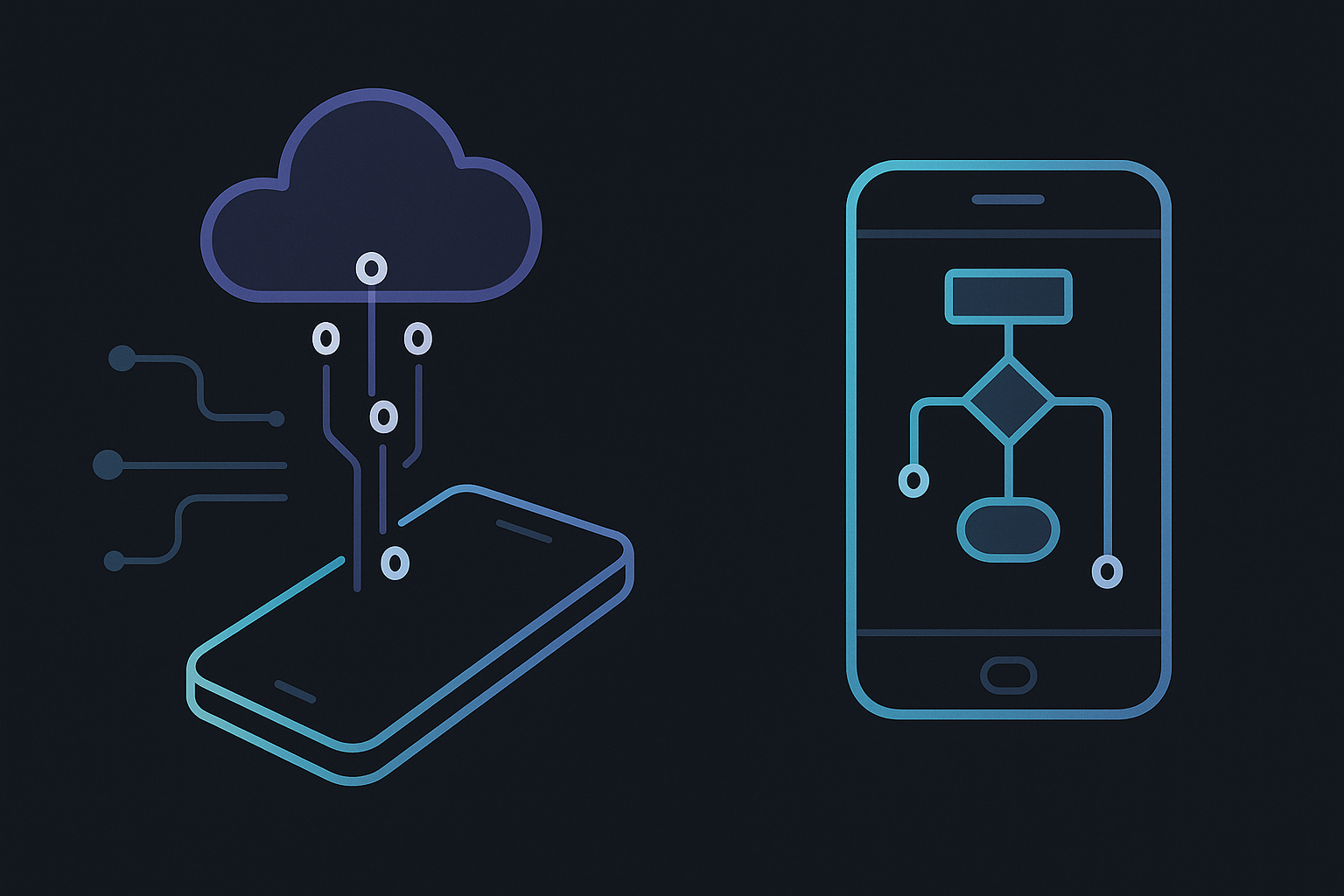
However, this research takes the opposite approach. It's called 'TinyML,' which literally means 'Tiny Machine Learning.' It's a technology that compresses massive AI models small enough to fit into a fingernail-sized microcontroller, allowing real-time inference to run directly on that tiny chip.
Why is this special? There are three reasons.
First, privacy. Heart data is among the most sensitive personal information. But with this method, data never leaves the device. Since there's no need to transmit it to the cloud, there's no risk of a leak.
Second, low power consumption. Continuously transmitting data wirelessly consumes a lot of battery power. However, when all computations are completed within the chip, power used for communication can be saved. This makes long-lasting wearables possible even with small batteries.
Third, immediacy. There's no round-trip time spent sending data to a server and waiting for a response, so decisions are made instantly, right on the spot.
How Was the Research Conducted?
Alright, let's dive into what the researchers actually built. We'll encounter some technical terms, but I'll break them down one by one.
Autoencoders, AI that Learns Normality
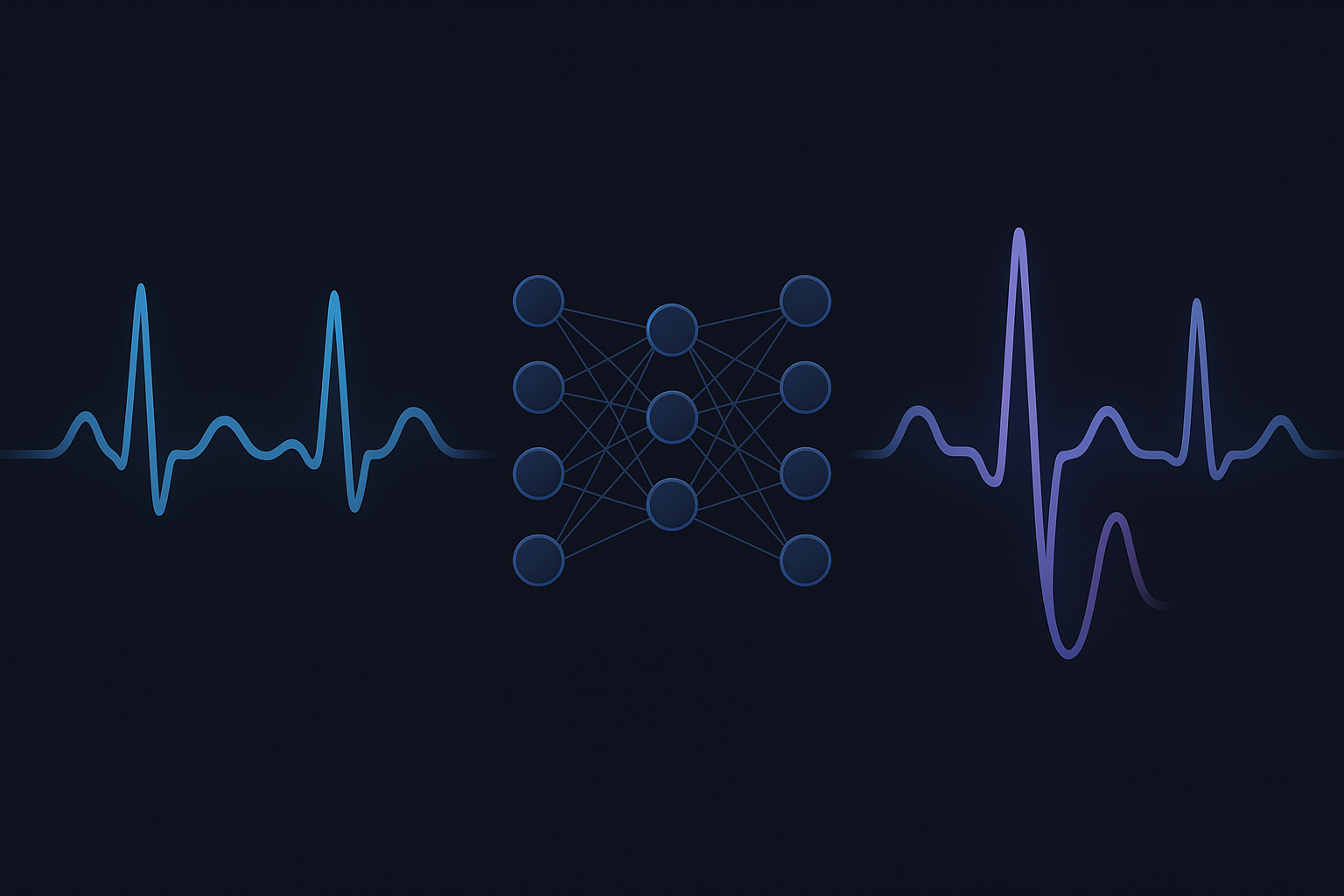
The core tool in this research is a type of artificial neural network called an 'autoencoder.' Autoencoders learn in a somewhat unique way. Instead of being explicitly taught with labels like "this is an arrhythmia, that's normal," they are first allowed to thoroughly learn 'what a normal heartbeat looks like.'
Here's an analogy: someone who walks the same commute every day memorizes every detail of that path. Then, one day, if something unusual appears, they immediately notice, "Huh? That's different from usual." Autoencoders work similarly. Having learned normal heartbeats so well, when a non-normal pattern comes in, they struggle to 'reconstruct' it, and that discrepancy becomes the clue to detecting an anomaly.
The researchers created an autoencoder model with minimized layers and parameters so it could fit into an embedded device. It's like putting a massive AI on a diet and sculpting it into its lightest possible form.
INT8 Quantization, Making AI Even Lighter
They also applied a technique called 'INT8 quantization.' Typically, AI calculations use highly precise floating-point numbers (e.g., 32-bit floating-point), which are accurate but heavy and power-intensive. Quantization is the process of converting these numbers into a much simpler form: 8-bit integers (INT8).
It's similar to compressing a high-resolution photo to significantly reduce its file size while maintaining a recognizable level of quality. Thanks to this, the model becomes smaller, computations are faster, and it consumes less power. It becomes the perfect form to deploy on a fingernail-sized chip.
Learning from MIT-BIH Data, Running on ESP32-S3
So, what did this AI learn from? It used a custom dataset built upon the 'MIT-BIH Arrhythmia Database'. MIT-BIH is a trusted collection of public electrocardiogram (ECG) data that has been widely used in ECG research for a long time. Researchers processed this data to create datasets suitable for their model training and evaluation.
And the truly exciting part is the validation method. They didn't just stop at PC simulations; they actually ran it on a microcontroller called the ESP32-S3. Compared to the smartphones or laptops we commonly use, the ESP32-S3 is an incredibly tiny and affordable chip. It's the kind of chip found in Internet of Things (IoT) devices or small electronic products.
On this small chip, they ran a runtime called 'TensorFlow Lite Micro'. As the name suggests, it's an extremely lightweight version of a massive AI framework, specifically designed for microcontrollers. It essentially acted as a bridge to make a huge AI work on a tiny chip.
Key Discovery: Small but Mighty
So, what were the results? The researchers validated its performance by processing over 95,000 ECG segments on this tiny chip. This wasn't just in lab simulations, but in a real device environment. It's an enormous amount of work for such a small chip.
And the research team didn't just look at the results as mere numbers. They meticulously analyzed failure cases 'annotation-wise' and 'record-wise'. Here, they made a very impressive discovery: some cases classified as incorrect by the model, upon closer inspection, were labeled as 'normal' in the reference data but potentially represented early-stage or subtle abnormal patterns in reality.
In other words, the AI might have detected subtle abnormal signals more sensitively than what humans had labeled as 'normal'. It wasn't wrong; it was actually more sensitive. This is an interesting facet that highlights the model's sophistication.
So, the researchers conducted a 'refined evaluation' after filtering out these ambiguous cases. As a result, the best-performing DNN-based autoencoder achieved the following metrics:
- Recall: 84% — Capturing 84% of actual abnormal signals without missing them
- F1 Score: 79% — A comprehensive metric indicating the balance between precision and recall
- Model Size: approx. 180KB — Smaller than a single photo
- Inference Latency: 9 milliseconds — Decision-making in the blink of an eye on the device
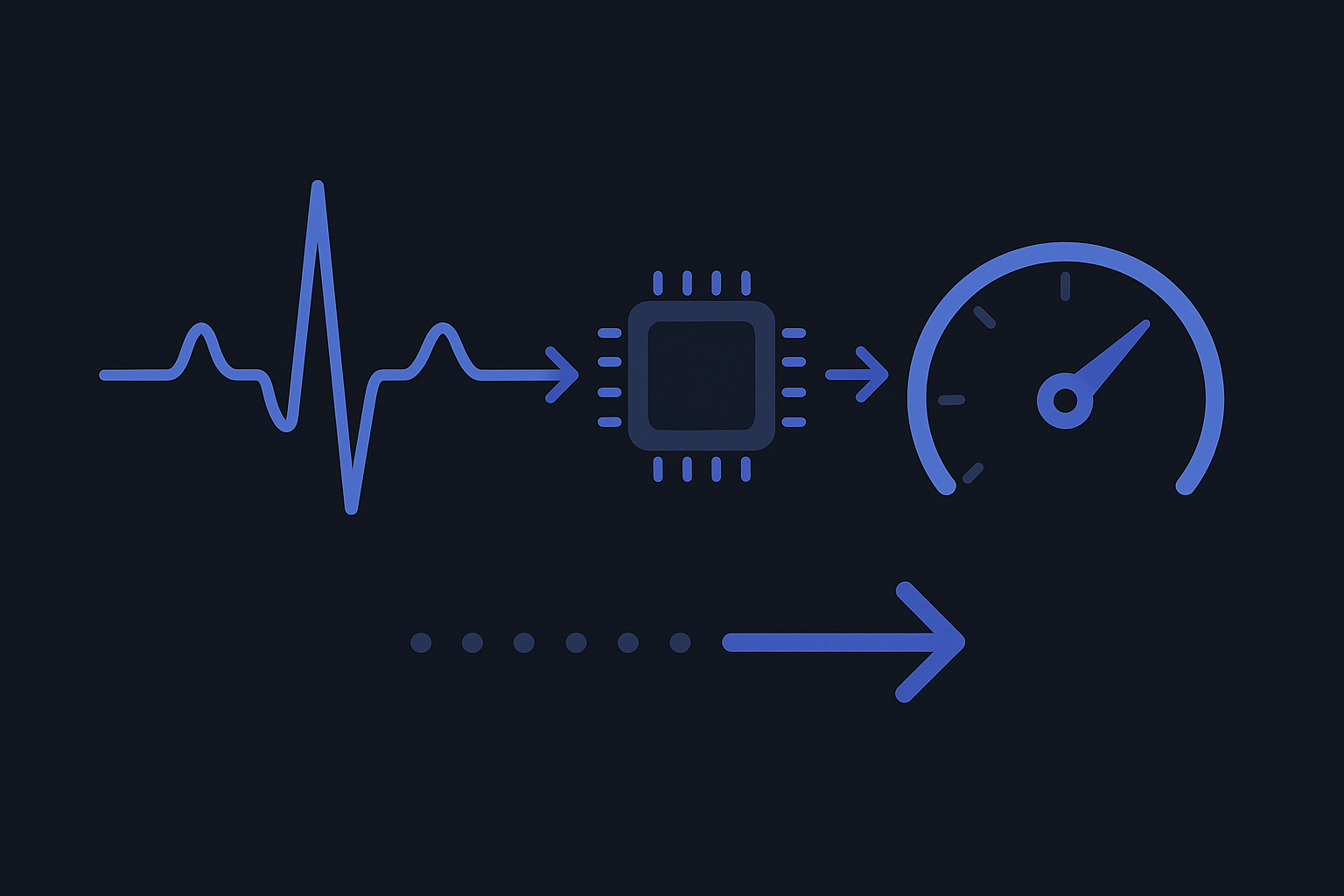
Let's reflect on what these numbers mean. 180KB is truly tiny. Considering that a single photo today typically takes up several megabytes, this AI is tens of times smaller. Yet, it makes a decision in 9 milliseconds, less than one-hundredth of a second.
The researchers concluded that these results "demonstrate the feasibility of low-power, privacy-preserving embedded wearable systems capable of performing fully accurate arrhythmia detection on-device." It's proof that a single small chip can protect your heart, without the need for elaborate servers.
What Does This Mean for My Life?
You might be thinking, "What does ECG chip research have to do with me?" But the direction this research points to is very closely related to our daily lives.
If you think about it, we're carrying more and more devices on our bodies. Smartwatches, bands, earbuds... it's an era where these devices read our body's signals. But if all those signals are constantly transmitted somewhere, we're essentially continuously leaking our most intimate data externally.
The 'on-device AI' demonstrated by this research paints a different future: a future where my data stays within my device, and decisions are made right there. This means we can receive smart assistance while preserving privacy. Plus, its low power consumption means less battery worry, and it works even where there's no internet.
And another thing, this research reminds us that "good AI doesn't necessarily need to be massive." If designed small and efficiently, a 180KB model can still accomplish meaningful tasks. This offers a small inspiration for how we view technology: bigger and heavier isn't always the answer.
A Look at the LINK BAND
Now, let's talk briefly about our LINK BAND. First, there's something I need to be upfront about.
This research deals with electrocardiogram (ECG) signals. ECG directly measures the heart's electrical activity. In contrast, the heart-related signal measured by LINK BAND 2.0 is PPG (photoplethysmography). PPG uses light to detect changes in blood flow, which is distinctly different from ECG. Therefore, the LINK BAND is not a medical device for diagnosing arrhythmias. I want to make this point absolutely clear. The LINK BAND's PPG helps observe heart rate and heart rhythm 'trends,' but it cannot replace medical diagnosis.
So, what do this research and the LINK BAND have in common? It's the philosophy of efficient, privacy-preserving, device-centric AI.
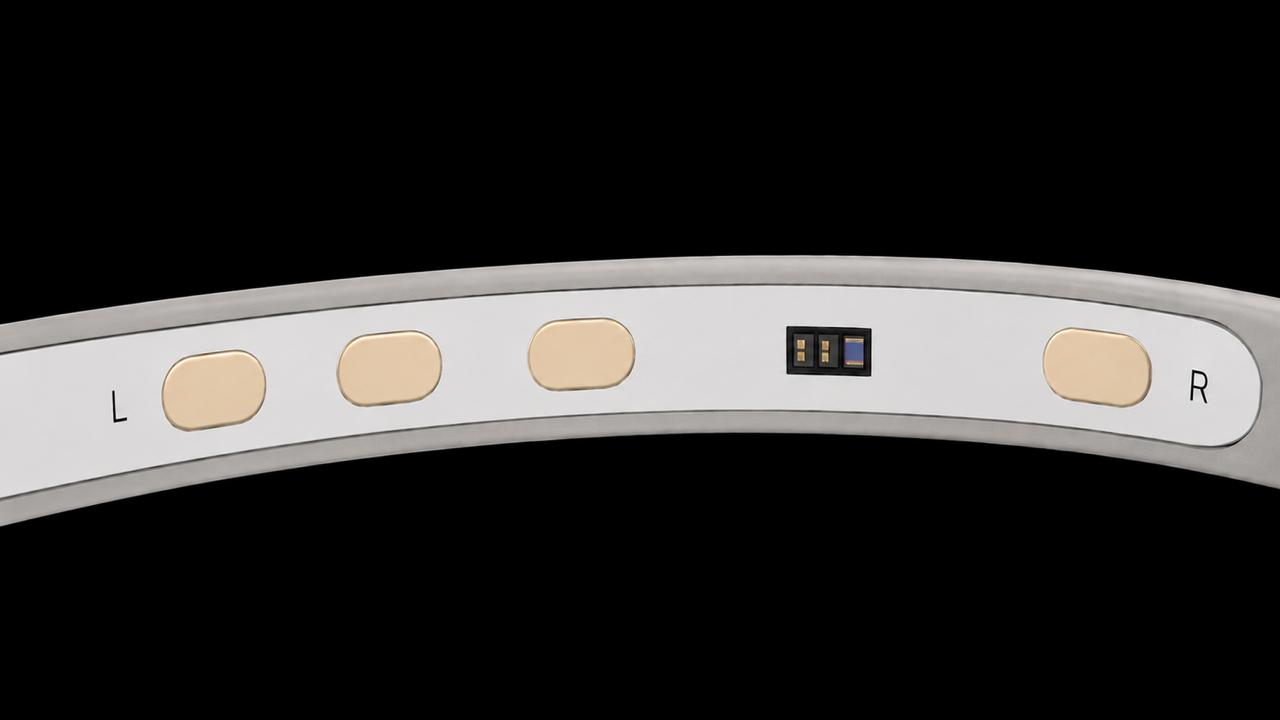
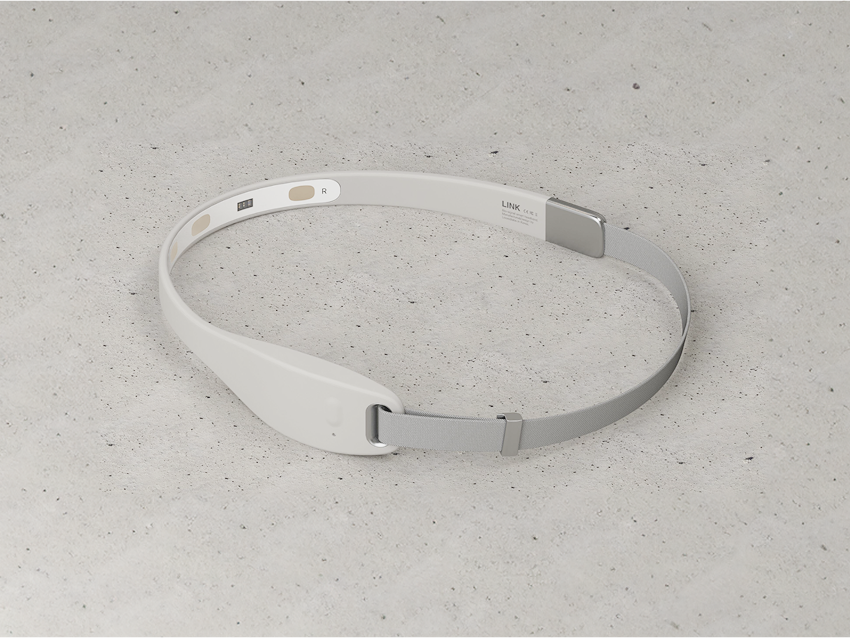
LINK BAND 2.0 is a wearable that simultaneously measures brainwaves (EEG), heart rate/blood flow pulse (PPG), and movement (ACC). These signals allow us to gently observe the state of our body and mind. The approach demonstrated by this research—working 'smartly on a small chip, yet protecting my data'—serves as an important compass as we continue to advance wearable technology.
Whether it's the rhythm of the heart or the flow of brainwaves, safely observing the signals of my body up close. That's the picture we're drawing together.
A Small Experiment You Can Try Starting Today
Inspired by this research, I'd like to suggest a small experiment you can easily try starting today: 'Observing your resting heart rate.'
The method is very simple:
1. Measure under the same conditions every day. The best time is right after waking up in the morning, before getting out of bed, when you are most relaxed. Consistent conditions make comparisons meaningful.
2. Don't get too caught up in a single number. What's important isn't the daily value, but the 'trend.' Observe the flow over a week or a month. If it's consistently higher or shows greater variability than usual, it can be a clue to review lifestyle factors like lack of sleep, stress, or caffeine intake.
3. Learn your own patterns. Just as the autoencoder had to sufficiently learn 'normal' to detect anomalies, the better we know our usual rhythm, the more easily we can spot days that are different. Notice the differences on days you've exercised, slept well, or experienced high stress.
However, I must emphasize again that this is purely 'self-observation' to reflect on your lifestyle. If you experience persistent palpitations or discomfort, you must consult a medical professional. Wearables are good companions, but they cannot replace a doctor.
- What is On-Device AI? — The Era Where Your Data Never Leaves Your Device
- PPG vs. ECG: What's the Difference? — A Tale of Two Heart Signals
- Small is Mighty: TinyML Unlocks the Future of Wearables
A Question This Research Poses to You
Finally, I'd like to leave you with a question to ponder together.
The AI in this study might have detected subtle clues of abnormality within signals that humans labeled as 'normal,' clues that humans themselves might have missed. If so, how closely are we listening to the small, subtle signals our own bodies send us?
In an era where a tiny chip on your wrist silently monitors your rhythm, without the need for massive servers or complex equipment, perhaps the most crucial thing is our own willingness to gently listen to our body's signals. What rhythm is your heart beating to today?
LINK BAND Insight
It's crucial to clarify that LINK BAND's Photoplethysmography (PPG) functionality serves as a tool for monitoring heart rhythm trends, rather than a medical device for diagnosing arrhythmias. However, LINK BAND fully aligns with the fundamental principle showcased in this research: the philosophy of efficient, on-device AI that securely safeguards personal data directly within the device.
Related Articles

Train Your Brain Like a Muscle: What a 534-Citation Neuroscience Review Reveals About EEG Neurofeedback
The moment you open your eyes in the morning, smartphone notifications pour in. Work emails, KakaoTalk, Instagram alerts, news headlines… Your brain is bombarded with information as soon as you wake up. You sip your coffee and get ready for work, but your mind is already full of tangled thoughts. “I need to nail that presentation at today’s meeting…,” “I can’t focus—probably because I worked late last night.” Have you ever had this experience? Every day, we make countless decisions, process information, and regulate emotions. But how often do we actually check whether our brain is in optimal condition? What if we could train our brain, just as athletes train their muscles? To find answers to this question, neuroscientists around the world have been researching for decades. And one powerful tool that has emerged is EEG neurofeedback. Today, I want to introduce you to an influential review paper published in *Neuroscience and Biobehavioral Reviews*, cited 534 times. This paper goes beyond simply explaining brainwaves—it uses meta-analysis to examine specific protocols that can actually improve cognitive abilities and emotional states in healthy individuals. Let’s explore the scientific method that can upgrade your daily performance.

L-FAME: Longitudinal Focused Attention Meditation EEG Dataset and Benchmark
The world's largest meditation EEG dataset, collected from 103 participants across more than 70 meditation sessions, has been released. We explore how brainwaves change during meditation, what the increase in alpha and theta waves signifies, and how LINK BAND connects to this groundbreaking research.
Symbol Emergence in Cognitive Developmental Systems: a Survey
In the face of a daily deluge of information, how do we efficiently comprehend and learn about the world? This article introduces a cutting-edge study that explores how our brains and advanced AI systems construct 'meaningful symbols' from complex sensory data, mirroring a child's journey of discovery. Delve into the astonishing mechanisms your brain employs to process information and discover how LINK BAND can contribute to understanding and optimizing your cognitive capabilities.
Experience LINK BAND 2.0
Measure your brainwaves in real-time with integrated EEG, PPG, and ACC sensors. See for yourself what you read about today.
View Product→