EEG-FuseFormer: Teaching AI to See a Seizure Coming
Vigneshwar Hariharan, Chithra Reghuvaran, Arlene John, Nhat Pham, Omer Rana, Deepu John, Ganesh Neelakanta Iyer. “EEG-FuseFormer: A Transformer-Driven Feature Fusion Framework for Seizure Onset Prediction.” IEEE International Instrumentation and Measurement Technology Conference (I2MTC), 2026. View Paper ↗
This research integrates features extracted by two distinct neural networks from EEG signals using a Transformer model, aiming to predict the onset of seizures. The study achieved an impressive average recall rate of 98.85% on the CHB-MIT dataset.
If You Could Know 30 Seconds Before a Seizure
Let's imagine for a moment. It's a typical afternoon, you're chatting with a friend at a cafe, and suddenly, it feels like the world stops. For individuals with epilepsy, seizures often strike without warning. It could happen while driving, descending stairs, or when you're alone in the bathroom. More than the seizure itself, the unpredictability of 'when it will happen' makes daily life much heavier.
But what if someone could give you a subtle heads-up just before a seizure begins? What if you could be told, 'Please sit in a safe place now'? The research we're exploring today is precisely about tackling that 'knowing in advance'. It's an attempt to teach artificial intelligence how to read brainwaves and capture the subtle signals that precede a seizure.
The study is named EEG-FuseFormer. It might sound a bit complex, but I'll break it down slowly, so please bear with me. If we break down the name a bit, its meaning becomes clear. EEG stands for electroencephalogram (brainwaves), 'Fuse' means 'to combine' or 'integrate', and 'Former' refers to 'Transformer'. So, the name itself encapsulates the meaning: 'a model that integrates various brainwave information using a Transformer'.
What Makes This Research Special
Epilepsy is one of the most common neurological disorders worldwide. Recurrent seizures significantly impact the quality of life. While diagnostic technologies have advanced considerably, accurately predicting 'when' a seizure will occur remains a profoundly challenging task. It's precisely this uncertainty that makes it difficult to mitigate the risks patients face in their daily lives.
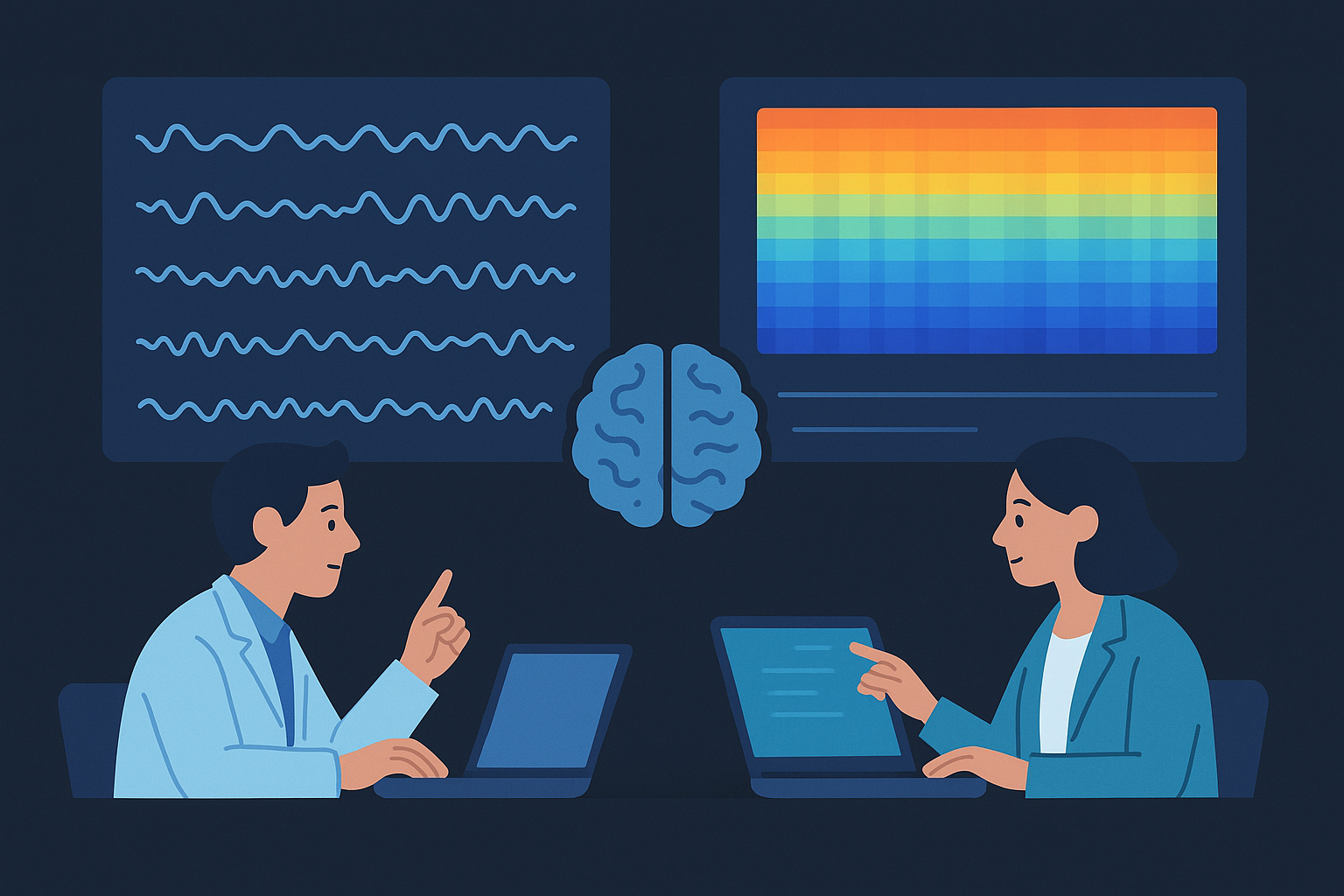
What makes this research special is that it doesn't view EEG signals through 'just one method'. Typically, AI models analyze data from a single perspective. But just like humans, when solving a problem, we often make more accurate judgments by considering multiple viewpoints, right? The researchers incorporated this very idea into their model.
The structure involves two different 'expert' neural networks, each examining brainwaves in its own distinct way, and then a smart 'coordinator' – the Transformer – brings these results together to make the final prediction. It's like a joint consultation, where instead of a single doctor diagnosing, two doctors from different specialties offer their opinions, which are then integrated.
Why was this collaborative approach necessary? Because brainwave signals are inherently complex and subtle. It's known that just before a seizure begins, there are subtle changes in the brain that differ from its normal state. However, these changes are so small and subtle that they can easily be missed by a single analysis method. Some clues are hidden within the 'temporal flow' of the signal, while others are embedded in the 'frequency composition'. Therefore, by employing both types of perspectives, the goal was to avoid missing any clues, no matter where they were hidden. Bringing together such diverse features is technically known as 'feature fusion'.
How Was the Research Conducted?
Now, let me introduce you to these 'two experts'. I'll keep it simple and focus on the core ideas without getting too technical.
The First Expert — CNN-LSTM
This expert directly examines raw, unprocessed brainwave signals. Brainwaves are signals measured simultaneously from various locations on the head, continuously changing over time. CNN-LSTM captures both of these aspects together. It simultaneously captures 'spatial features' (what's happening in which part of the head) and 'temporal features' (how the signal changes over time). You can think of it as an expert skilled at reading the flow.
The Second Expert — ResNet-18
This friend takes a slightly different approach. Instead of directly analyzing raw EEG signals, it transforms them into "pictures" using a tool called STFT (Short-Time Fourier Transform) before analysis. What this means is, just as we distinguish between high and low pitches when listening to sound, it visually unfolds the "frequencies" mixed within the brainwaves as visual patterns. ResNet-18 is an expert at finding meaningful patterns within these frequency 'pictures'.
The Orchestrator — Transformer Encoder
Now, the intermediate features extracted by these two experts need to be combined, right? This is where the Transformer Encoder comes in. The Transformer, which is also a core technology behind the smart AI chatbots we use today, has the ability to autonomously decide "where to focus more" among various pieces of information. It doesn't just simply add the opinions of the two experts; instead, it intelligently fuses them by assigning weights to important parts according to the context.
This combined information then passes through fully connected neural networks (dense layers) to finalize the prediction. It determines: "Is this the state immediately preceding a seizure, or not?" The researchers call this entire process a "feature fusion framework."
Key Findings
So, did this collaborative system actually work well?
The researchers validated this model using the CHB-MIT dataset. This is a widely used public EEG dataset in epilepsy research. And the results were truly impressive.
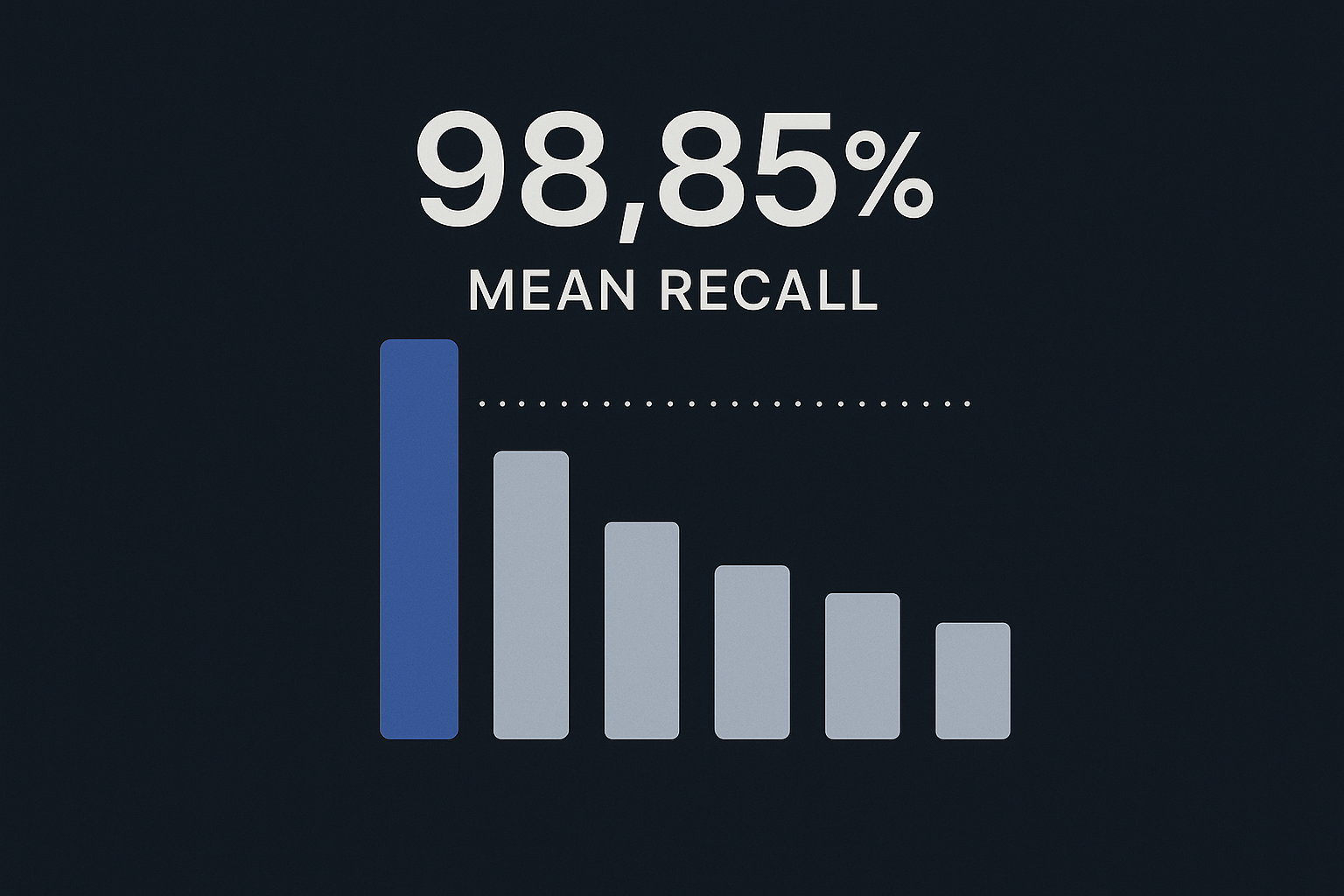
The model achieved an average recall of 98.85%. The term "recall" might be a bit unfamiliar here, but simply put, it's "the proportion of actual pre-seizure situations that the model correctly identified without missing them." In seizure prediction, this recall rate is particularly crucial. This is because if truly dangerous moments are missed, the purpose of providing an early warning is lost. The figure of 98.85% surpassed most existing state-of-the-art methods.
There's another noteworthy point. The researchers evaluated whether this model also performed well across different patients (cross-patient). In fact, this is a really challenging aspect, as each person's brainwave patterns differ slightly. Would a model trained only on data from person A work well for a completely new person B? Typically, performance drops significantly.
Therefore, the researchers also employed a method called "target adaptation." This involves slightly fine-tuning a pre-trained model with limited data from a new patient. As a result, metrics such as recall, precision, and F1 score improved in cross-patient validation scenarios. In other words, even with a small amount of personalized data, the model can adapt much better to that individual.
This part is personally my favorite aspect. To build a new model entirely from scratch for just one person would require an enormous amount of data. However, in reality, it's difficult to collect such a large amount of seizure data from a single patient. But if you take a "smart model that has already learned from many people" and slightly refine it with a small amount of data from that individual, personalized customization becomes possible at a lower cost. It's similar to a teacher with a strong foundation meeting a new student; after observing the student's characteristics for just a few days, they can quickly provide tailored guidance.
Let's briefly touch upon precision and F1 score. Precision is "the proportion of true positives among all instances the model predicted as pre-seizure." If false alarms occur too frequently, people will stop trusting the warnings, so this metric is crucial. The F1 score, on the other hand, is a single metric that represents the balance between recall and precision. The improvement in all three metrics together signifies that the model has made consistent progress towards "reducing false alarms without missing actual events."
Finally, the researchers also evaluated the model's computational complexity based on execution time, assessing how quickly it runs in various hardware environments. After all, a model's accuracy is irrelevant if it's too computationally heavy to run on real-world devices. This serious consideration for practical applicability further strengthens our confidence in the research.
What Does This Mean for My Life?
You might be thinking, "I don't have epilepsy, so how is this research relevant to me?" However, the message embedded in this study is far broader than you might imagine.
First, this is a story about "technology that can read subtle signals sent by the body in advance." Beyond seizures, our bodies always send small signals before something significant happens – things like sudden fatigue, decreased concentration, or changes in sleep patterns. The fact that AI is becoming increasingly adept at reading these signals means that future healthcare is shifting from a "treat after you're already sick" approach to one that "prepares before problems even arise."
Second, it's a lesson that "combining multiple perspectives leads to greater intelligence." The feature fusion central to this research demonstrated that more accurate judgments emerge when data is viewed and synthesized from various angles. This is wisdom applicable to our everyday decision-making as well.
Third, for individuals with epilepsy and their families, this represents a very direct source of hope. If seizures can be predicted in advance, it opens up the possibility of avoiding dangerous situations and living daily life with greater peace of mind. Gaining the reassurance of "it's safe now" before driving, swimming, or going out alone means more than just technological advancement. It's about gradually reclaiming lost everyday freedoms.
What also resonates is that the researchers considered "when patients differ" and "execution speed on actual devices." They didn't forget that a technology only truly becomes meaningful when it moves beyond laboratory brilliance and integrates into the daily lives of real people. This kind of attitude is essential for research to translate into genuine assistance.
A Look Through LINK BAND
Now, let's have an honest discussion about LINK BAND.
LINK BAND 2.0 is a wearable device that measures brainwaves (EEG) along with heart rate/blood flow signals (PPG) and movement (ACC). Since the core of this research is EEG, or brainwaves, it's a topic directly related to LINK BAND. It's interesting how both deal with the "language" of brainwaves.
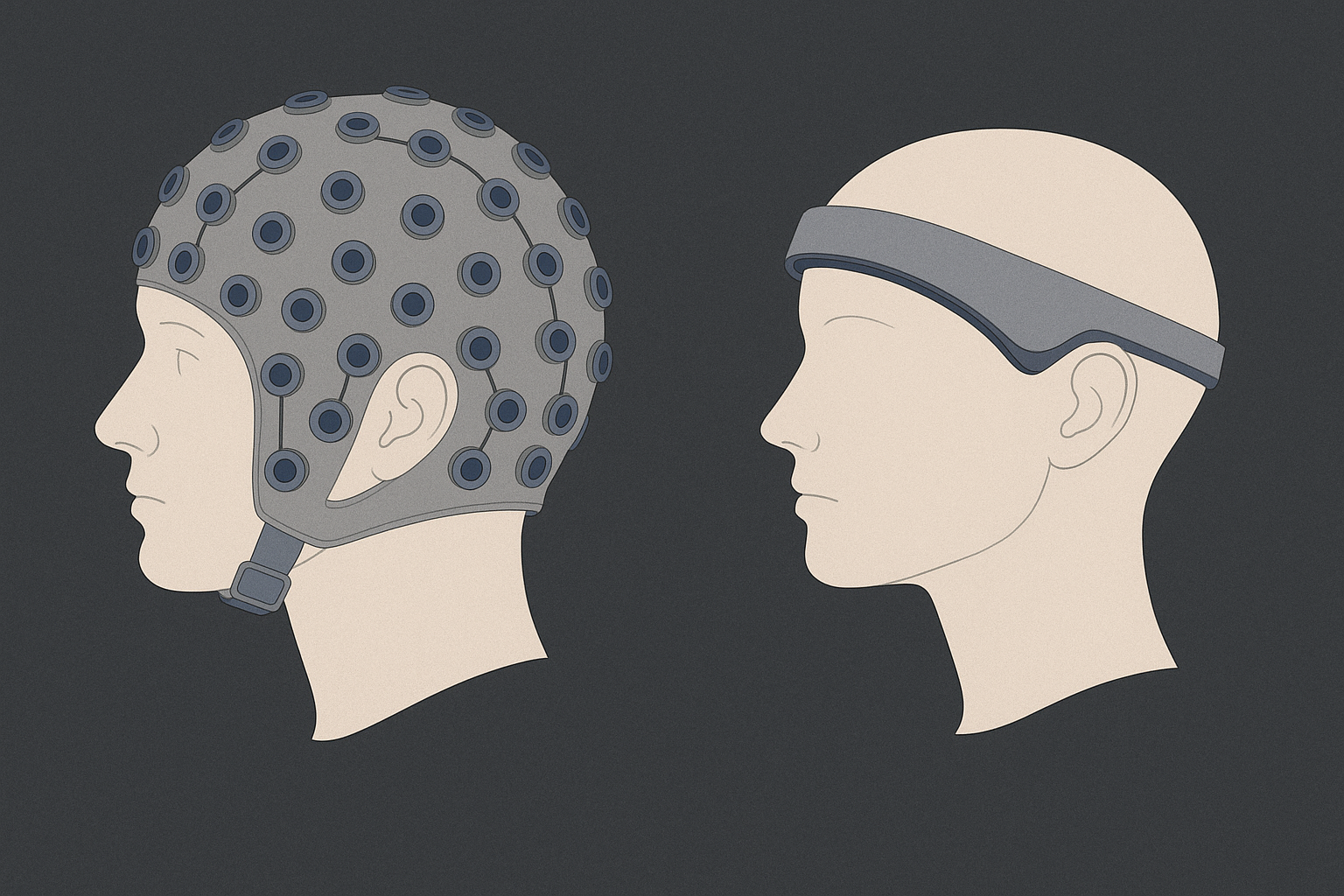
However, I want to state this very clearly and responsibly: LINK BAND is NOT a medical device for seizure prediction. This research is based on clinical EEG measurement equipment used in hospitals and specialized datasets like CHB-MIT collected with such equipment. Multichannel EEG systems, precisely attached to multiple points on the head in a medical setting, and consumer wearables designed for comfortable everyday use, have distinctly different measurement objectives, precision levels, and channel counts.
Therefore, you should not expect LINK BAND to "predict seizures in advance." That is not the reality, and stating otherwise would be irresponsible. Any diagnosis or prediction related to epilepsy must be made by professional medical personnel using clinical equipment.
What then is the true meaning of consumer EEG wearables like the LINK BAND? It's "a window into your brain's state in everyday life, without any burden." It's about casually observing how brainwaves change when you're focused versus relaxed, or what your brain's rhythm is like after a good night's sleep compared to a poor one. It's not for medical diagnosis, but rather an everyday tool for better self-understanding.
When you think about it, the accumulation of these daily observations is quite valuable. Even sophisticated medical AI, like in this study, is ultimately the result of "learning patterns from vast amounts of brainwave data." Our habit of consistently monitoring our brain's rhythm in daily life is also a process of building our own small dataset to better understand ourselves. Of course, don't forget that the purpose is not diagnosis, but rather a gentle guide for better rest, focus, and a healthier day.
Furthermore, the idea demonstrated in this study – that "fusing multiple signals leads to a richer understanding" – resonates with the philosophy of LINK BAND, which measures EEG, PPG, and ACC simultaneously. By looking at not just brainwaves, but also heart rate and movement, we can understand our body's state more holistically.
A Small Experiment You Can Try Starting Today
The core idea of this study — "noticing subtle changes in advance" — can be lightly practiced in our daily lives, even without elaborate equipment.
Keep a Personal Condition Signal Diary
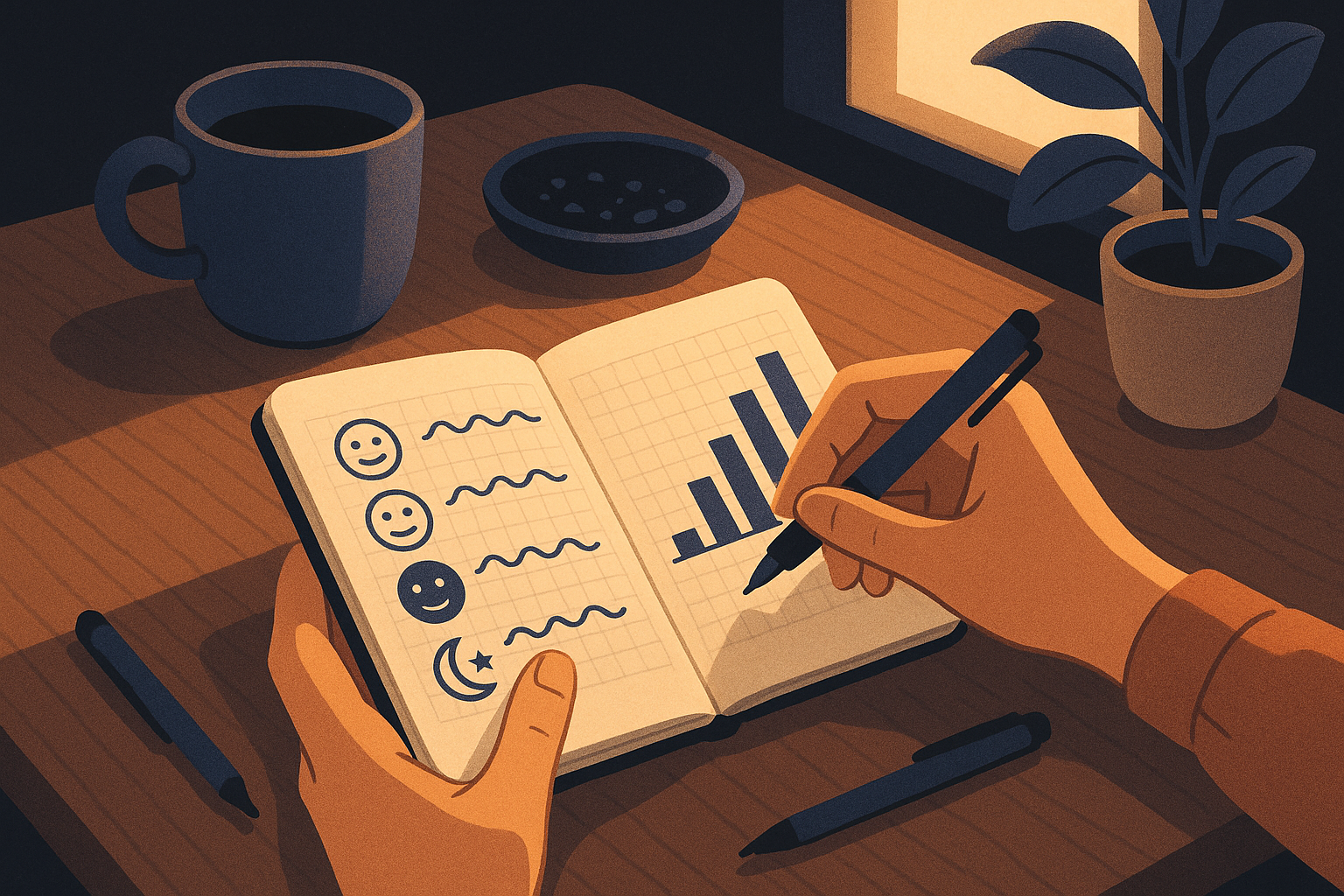
Throughout the day, jot down the small signals your body sends. Things like, "Around 3 PM, my head suddenly felt foggy," "Drowsiness hit right after lunch," or "My hands trembled slightly after drinking coffee." Even after just a week of writing, something remarkable happens: your own patterns start to emerge, such as, "Ah, if I sleep less than 6 hours, my concentration always crashes the next afternoon."
This is essentially a miniature version of what this study accomplished. Just as AI identified pre-seizure patterns in brainwaves, we too can discover "signals before something happens" in our body's data. And by knowing these signals, we can prepare in advance — by taking a short break before feeling foggy, or moving lightly before drowsiness sets in.
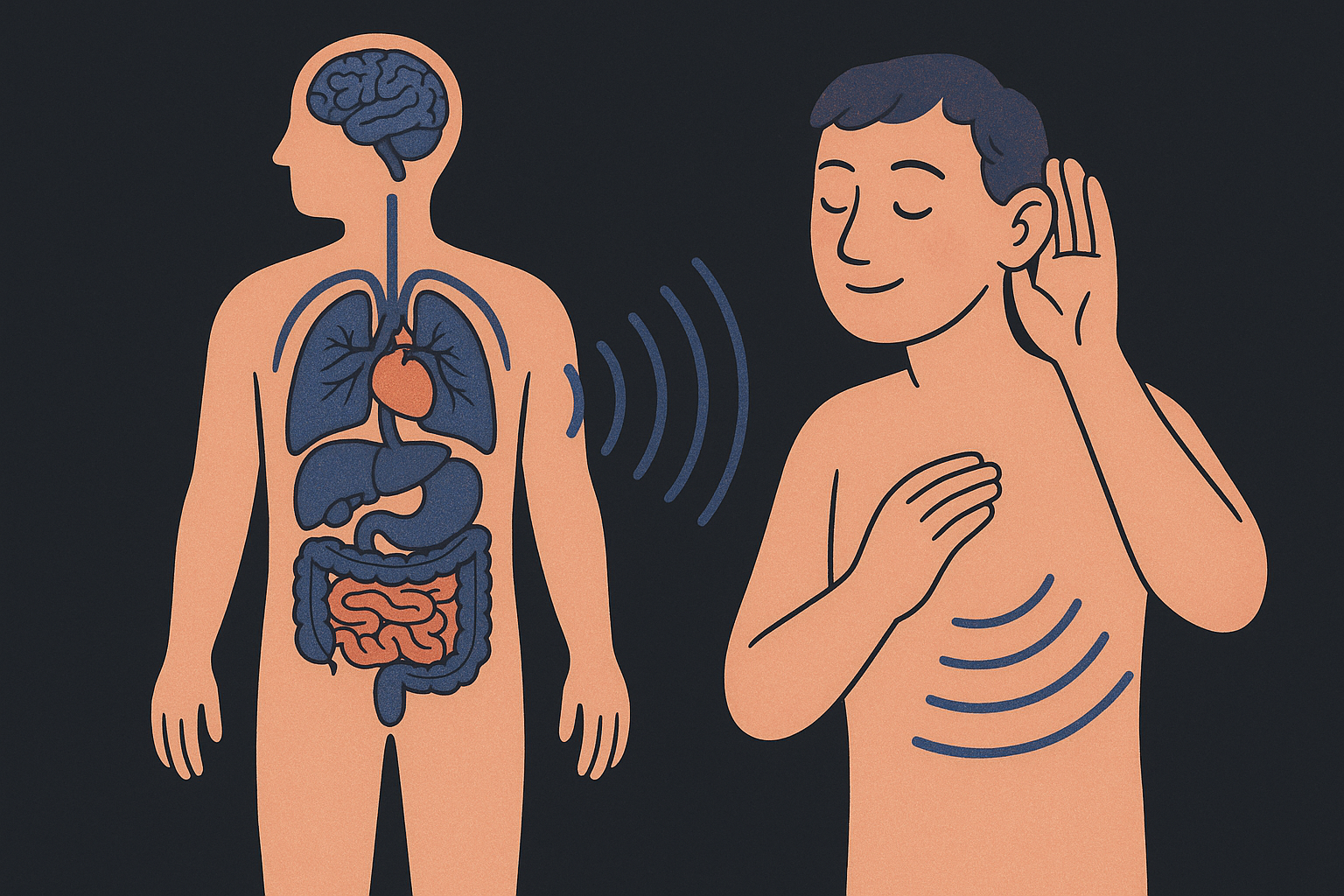
Adding another perspective makes it even more interesting. Just as the study "combined the perspectives of two experts," when recording your condition, try noting multiple aspects — sleep, meals, mood, activity level — rather than just one. Connections that weren't visible when viewed separately will finally emerge when put together.
Here's another practical tip. Don't try to record everything perfectly from the start. Just three lines a day are enough: "What time did I sleep today?", "What was my condition today on a scale of 1 to 10?", and "What was the most memorable body signal?". Collect these three lines for a week, then a month, and that alone will create your own small dataset. At some point, you'll discover a pattern for yourself, thinking, "Ah, my condition tends to decline on days like these." That moment of discovery is essentially the same thing this study aimed to teach AI.
The Question This Study Poses to You
This study taught AI how to interpret "before a seizure occurs." This was possible because it ultimately relied on the belief that "changes always send small signals before they happen."
So, what small signals is your body sending you right now? And how closely are you listening to them? Perhaps the most sophisticated predictive model might just be your own attentive care, gently observing your body every day.
While the era of advanced artificial intelligence reading potential dangers from brainwaves is approaching, the fundamental truth remains unchanged: the starting point for all this technology is ultimately "the mindset of listening to your body's voice." Just for today, take a moment to pause and ask yourself: "Am I okay right now? What is my body trying to tell me?" That small question will be the first step towards a healthier and kinder tomorrow.
LINK BAND Insight
This research represents a significant medical study focused on predicting immediate pre-seizure states using clinical-grade EEG data. While LINK BAND is not a medical device intended for seizure prediction, it offers a friendly window into understanding the rhythms of our brain in daily life, utilizing the very same language of EEG.
Related Articles
Train Your Brain Like a Muscle: What a 534-Citation Neuroscience Review Reveals About EEG Neurofeedback
The moment you open your eyes in the morning, smartphone notifications pour in. Work emails, KakaoTalk, Instagram alerts, news headlines… Your brain is bombarded with information as soon as you wake up. You sip your coffee and get ready for work, but your mind is already full of tangled thoughts. “I need to nail that presentation at today’s meeting…,” “I can’t focus—probably because I worked late last night.” Have you ever had this experience? Every day, we make countless decisions, process information, and regulate emotions. But how often do we actually check whether our brain is in optimal condition? What if we could train our brain, just as athletes train their muscles? To find answers to this question, neuroscientists around the world have been researching for decades. And one powerful tool that has emerged is EEG neurofeedback. Today, I want to introduce you to an influential review paper published in *Neuroscience and Biobehavioral Reviews*, cited 534 times. This paper goes beyond simply explaining brainwaves—it uses meta-analysis to examine specific protocols that can actually improve cognitive abilities and emotional states in healthy individuals. Let’s explore the scientific method that can upgrade your daily performance.
L-FAME: Longitudinal Focused Attention Meditation EEG Dataset and Benchmark
The world's largest meditation EEG dataset, collected from 103 participants across more than 70 meditation sessions, has been released. We explore how brainwaves change during meditation, what the increase in alpha and theta waves signifies, and how LINK BAND connects to this groundbreaking research.
Symbol Emergence in Cognitive Developmental Systems: a Survey
In the face of a daily deluge of information, how do we efficiently comprehend and learn about the world? This article introduces a cutting-edge study that explores how our brains and advanced AI systems construct 'meaningful symbols' from complex sensory data, mirroring a child's journey of discovery. Delve into the astonishing mechanisms your brain employs to process information and discover how LINK BAND can contribute to understanding and optimizing your cognitive capabilities.
Experience LINK BAND 2.0
Measure your brainwaves in real-time with integrated EEG, PPG, and ACC sensors. See for yourself what you read about today.
View Product→