Tracking Full-Body Motion Without a Camera, Using Tiny Sensors
Dominik Hollidt, Tommaso Bendinelli, Christian Holz. “Ultra Diffusion Poser: Diffusion-Based Human Motion Tracking From Sparse Inertial Sensors and Ranging-Based Between-Sensor Distances.” Proceedings of the IEEE/CVF Conference on Computer Vision and Pattern Recognition (CVPR), pp. 7036-7046, 2026. View Paper ↗
This article unveils a novel diffusion model that reconstructs full-body motion without the need for cameras. It achieves this remarkable feat by exclusively utilizing a few small inertial sensors strategically placed on the body, combined with precise measurements of the distances between these sensors. By expertly extracting geometric cues embedded within these distance relationships, the model significantly outperforms traditional methods, reducing joint position errors by up to 22%.
What if We Could Capture Body Movement Without Cameras?
Have you ever watched movie or game characters move with such lifelike fluidity and wondered, "How do they do that?" Typically, actors covered in small markers perform in specialized studios surrounded by cameras. This technology, which captures human movement as data, is called 'motion capture'.
However, this method has clear limitations. It requires a dedicated space filled with expensive camera equipment, and movements can be missed if the body is obscured from the cameras. Crucially, it's virtually unusable in everyday settings like our living rooms, gyms, or outdoor parks. Whether you're exploring virtual worlds with a VR headset, correcting your exercise form, or transferring your movements directly to an avatar — you can't exactly carry an entire camera studio with you.
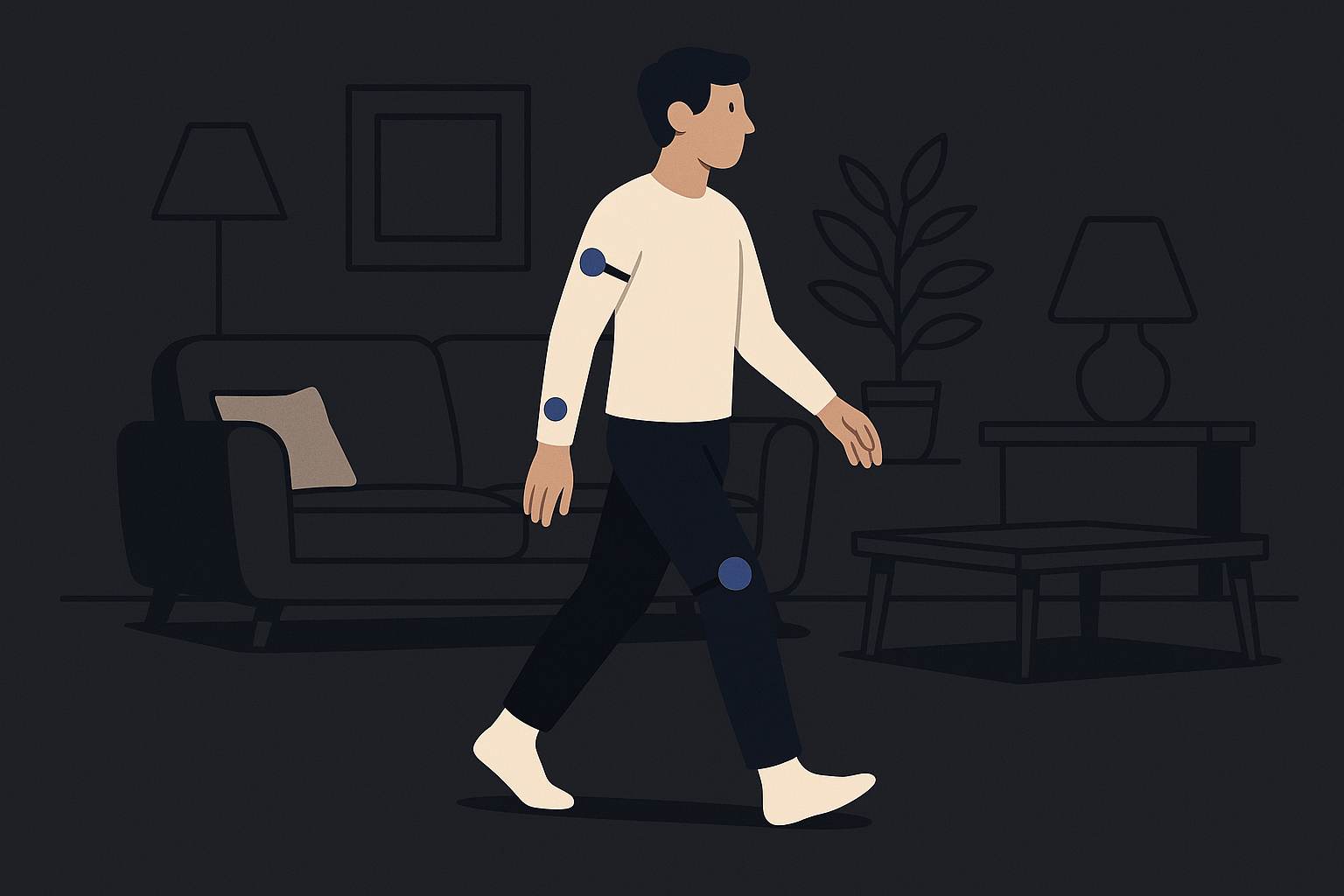
For a long time, researchers have been exploring alternative approaches. "What if we could detect movement using only small, wearable sensors instead of cameras?" If that were possible, motion capture would no longer be confined to specialized studios. We could capture our body's movements as data on our commute, on a neighborhood stroll, or even in bed before sleep. The paper we're introducing today is a brilliant study that takes us one step closer to answering this very question. While the title is a bit long, it introduces a new method called 'Ultra Diffusion Poser'. The 'Ultra' in its name connects to UWB technology, which we'll discuss later, and 'Diffusion' relates to the method made famous by recent image-generating AI. Let's unpack it step by step.
Why This Research Is Special
Among the small sensors attached to the body, the most common is the IMU (Inertial Measurement Unit). Despite its fancy name, most of us already carry one. When you rotate your smartphone horizontally, the screen rotates with it, right? Your smartwatch counts your steps? That's all thanks to the IMU. An IMU is a tiny, inexpensive sensor that measures acceleration (how fast something is moving) and rotation (which way it's turning).
Research has already been underway to reconstruct full-body movements using just a few IMUs attached to different parts of the body, without cameras. It offers significant advantages: no worries about obstructed views like with cameras, and since it's wearable, it can be used anywhere in daily life.
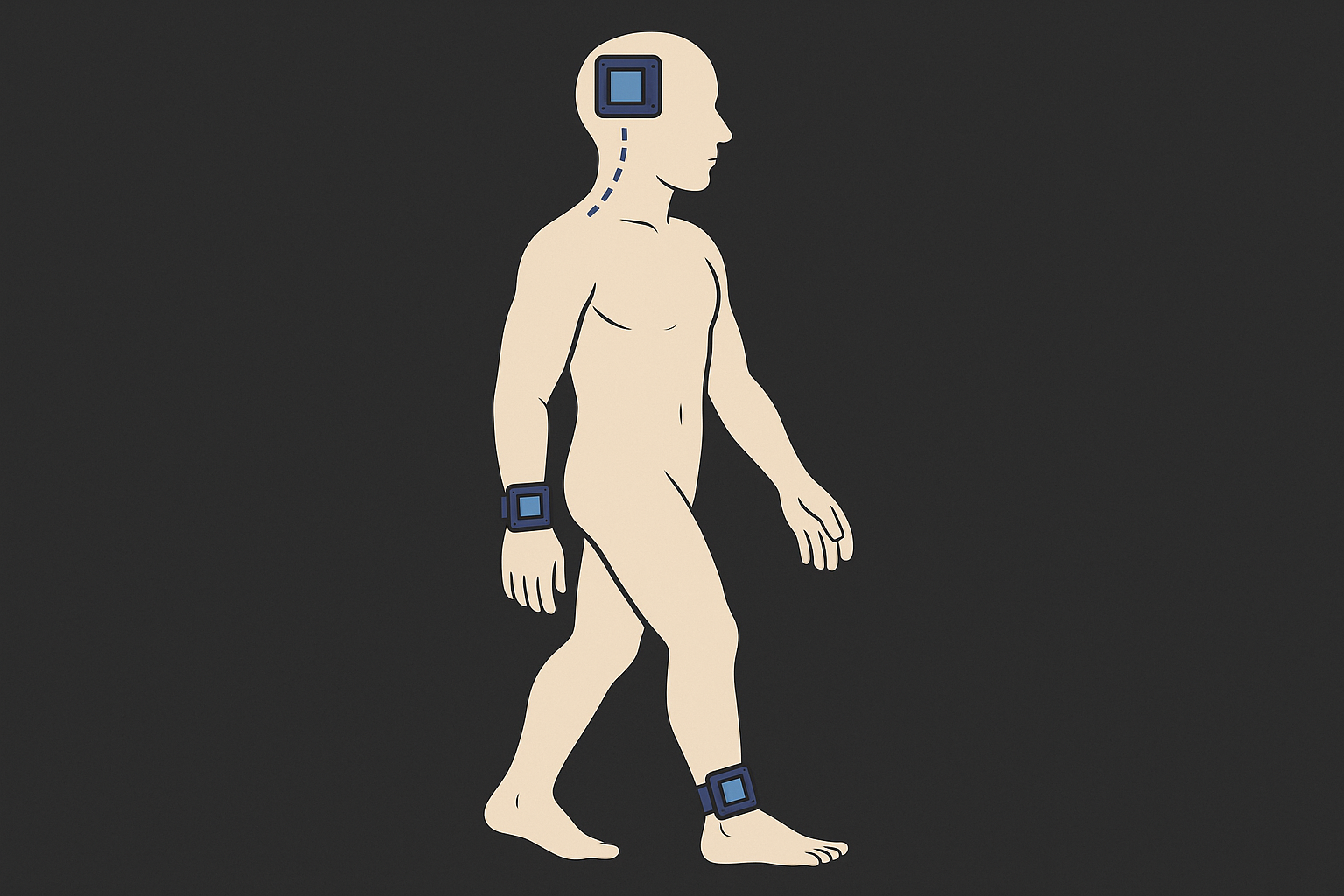
However, IMUs have a troublesome weakness. It's a phenomenon called 'drift'. IMUs estimate position by continuously adding up incremental changes – "I moved this much now" – but even tiny errors accumulate over time. It's like walking with your eyes closed, counting "one step, another step"; initially, you might be close, but gradually you'll stray further from your actual position. Over time, it points to increasingly inaccurate locations.
To mitigate this drift, recent research incorporates a technology called UWB (Ultra-Wideband). UWB is a technology that can measure the 'distance' between sensors quite accurately. It works by precisely measuring the time it takes for radio waves to travel from one sensor to another, then calculating the distance. For example, it can tell you "the wrist sensor and ankle sensor are currently 80 centimeters apart". By using this distance information alongside IMU signals, the 'drift' in position estimation that occurs when using IMUs alone can be significantly reduced, as the distance acts as an 'anchor'.
However, this paper makes a keen observation here. Previous studies have only used UWB distance information as mere "additional input material." The distance, as a numerical value, actually contains a powerful 'physical constraint' regarding the sensors' positions, but previous research failed to properly leverage this constraint. This deep dive into that very point is what makes this research special.
How Did the Research Unfold?
Let's follow the research team's ideas step by step. The core consists of three key components.
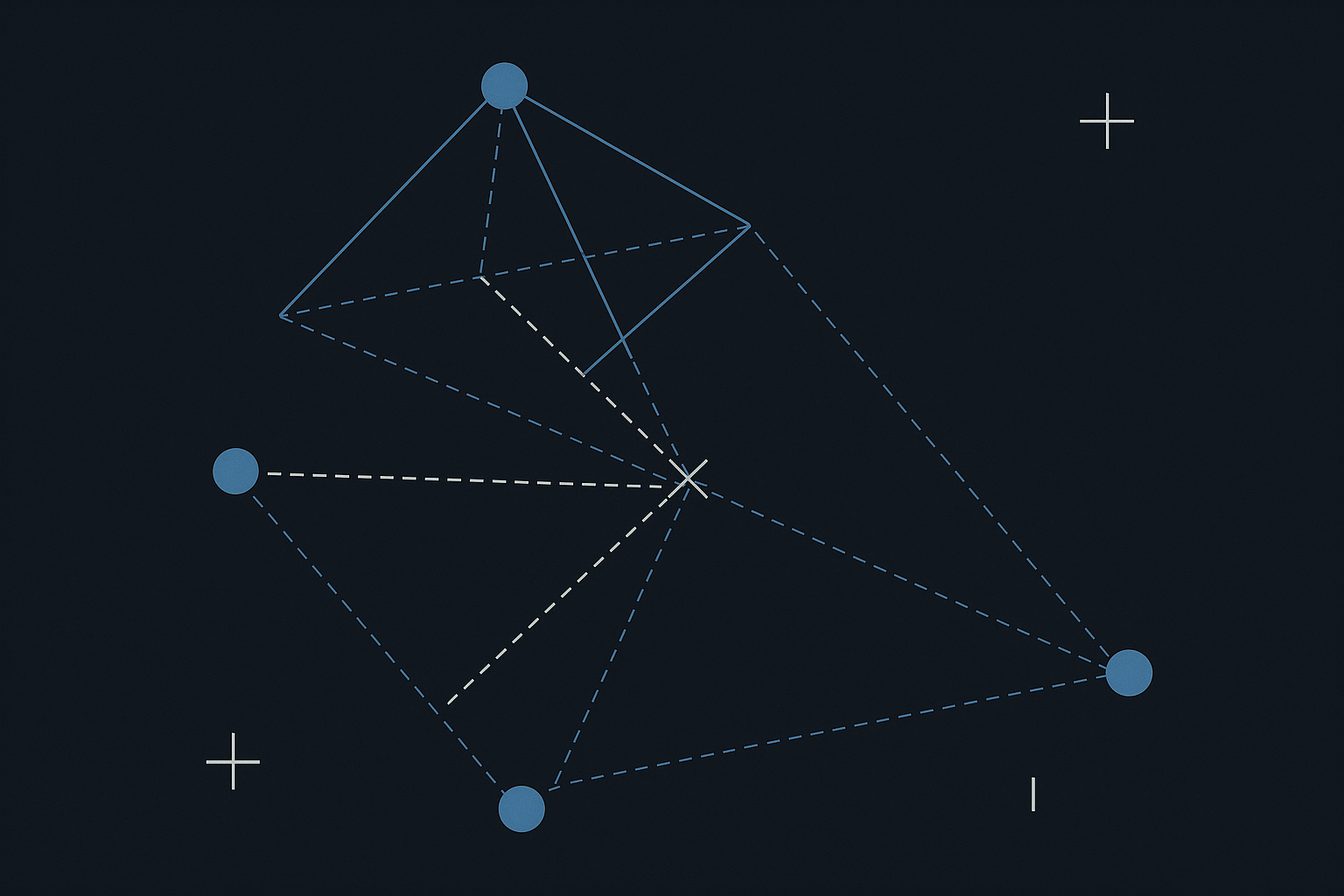
First, the Spatial Layout Module. As mentioned earlier, UWB tells us the distance between sensors. However, if you collect enough distances, you can go beyond simply knowing "how far apart they are" and inversely calculate how the sensors are arranged in 3D space. It's like when three friends tell each other, "I'm 5 meters from you, and 3 meters from them," and we can roughly visualize their positions in our minds. The research team created a module that analytically, or mathematically cleanly, reconstructs the 3D sensor layout from these distances. This reconstructed position information becomes a much richer and more useful clue than simple distance numbers.
Second, the Diffusion Model. This is the 'diffusion' found in the name 'Ultra Diffusion Poser'. Diffusion models are a common technique used in AI for generating images these days. To put it very roughly, you can think of it as a process that starts with meaningless noise in a foggy haze, gradually clearing the fog to produce increasingly clear results. In this research, the 'increasingly clear' result is the human pose. And the clues used as guidance when clearing the fog are IMU signals, UWB distances, and the 3D sensor positions just reconstructed — these three are all fed in together as conditioning signals.
Third, UWB-Diffusion Guidance. However, there was one more problem. As the diffusion model generates poses, it might produce results that deviate from the actually measured distances between sensors. For example, UWB might measure "two sensors are 80 centimeters apart," but the pose generated by the model might show them as being about 1 meter apart. So, throughout the pose generation process, the researchers added a mechanism to subtly guide the predicted pose to align well with the actual measured distances. That's the UWB-Diffusion Guidance.
To summarize, reconstructing positions from distances (Spatial Layout Module), drawing out the pose with those rich clues (Diffusion Model), and continuously correcting it during the process to ensure it doesn't deviate from the measured values (Guidance) — this is a method where these three elements harmonize.
Key Findings
So, what were the results? I'll accurately convey only the facts presented in the paper.
With these three contributions working together, this method achieved state-of-the-art performance among existing studies addressing the same problem. Specifically, it reduced the joint position error by up to 22% compared to previous methods. Joint position error, simply put, is an indicator of "how much the AI-estimated position of a joint, like an elbow or knee, deviates from its actual position." A smaller number means greater accuracy.
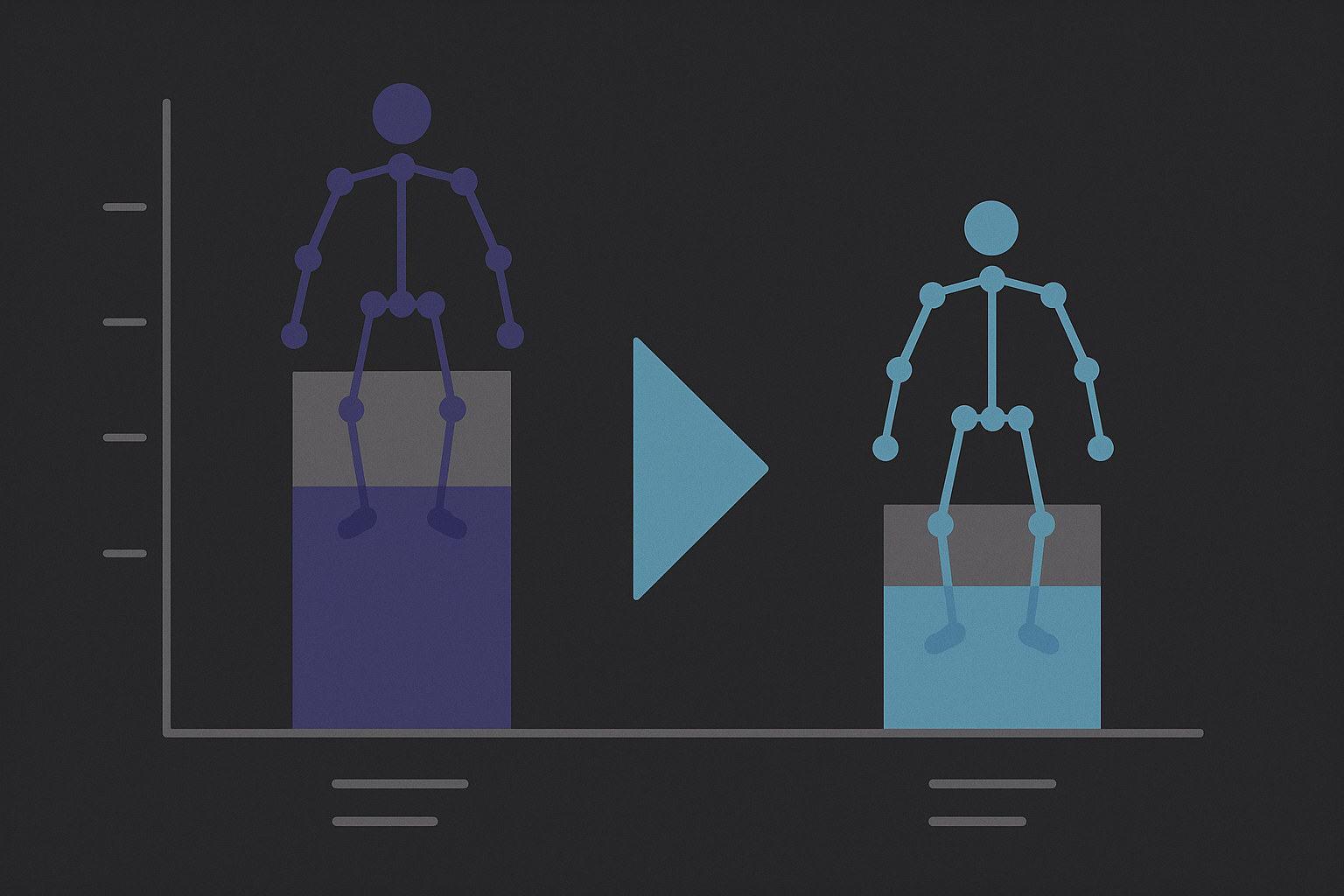
The most crucial insight here is this: instead of simply treating the 'geometric constraints' embedded in UWB distance measurements as mere input data, they actively utilized them to reconstruct the 3D arrangement of the sensors — and that shift in perspective led to an improvement in accuracy. It's a demonstration that even with the same ingredients, the outcome changes depending on how you 'cook' them.
For reference, both the 22% figure and the phrase 'state-of-the-art performance' are exactly as stated in the paper's abstract. Other specific details like dataset size or further metrics are not provided in the abstract, so I won't add them here.
What Does This Have to Do With My Life?
You might be thinking, 'Full-body motion capture? That sounds pretty far removed from my daily life.' However, the direction this technology is heading is surprisingly close to our everyday experiences.
Consider this: When you're playing a VR game in your living room, how natural would it feel if your entire body was seamlessly translated into the virtual world using just a few small sensors attached to you, without any cameras? What if, at the gym, sensors you're wearing could tell you if your squat or deadlift form is correct, without you having to stand in front of a camera? Or what if someone undergoing rehabilitation could exercise at home and receive data-driven feedback on the accuracy of their movements?
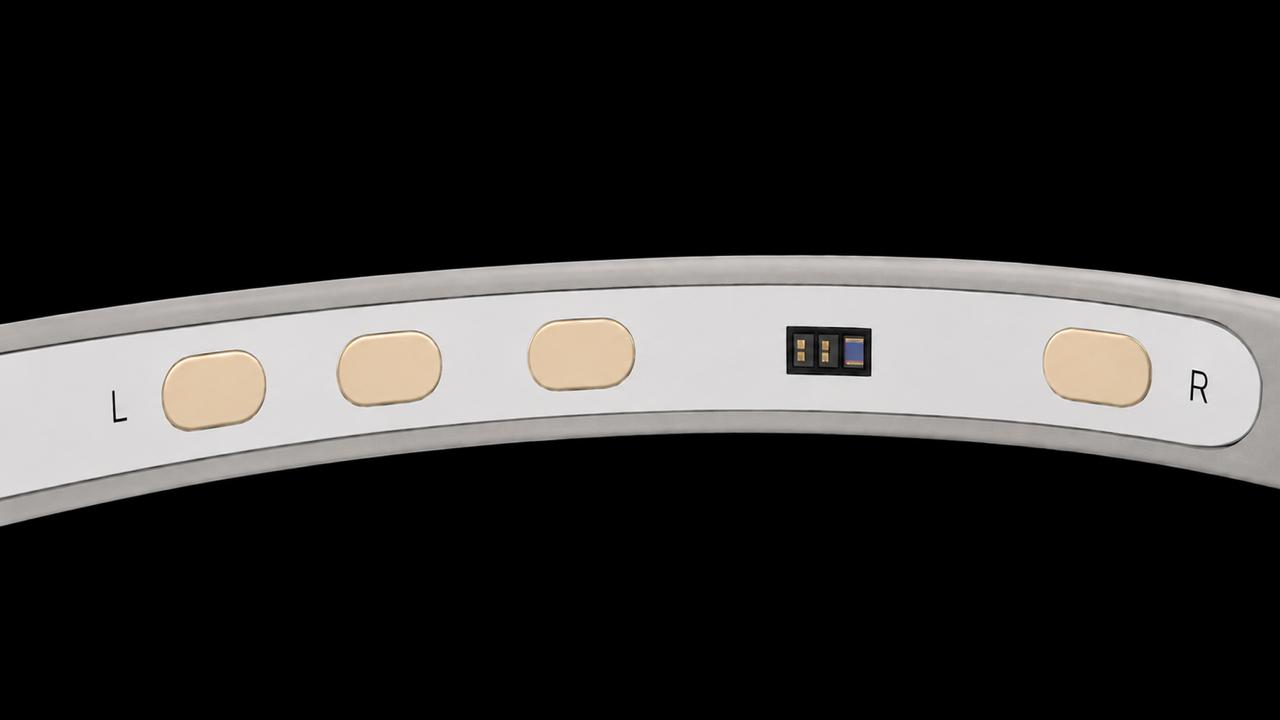
The common thread in all these scenarios is reading movement 'with small, wearable sensors, without expensive camera studios.' And for that to happen, it needs to be accurate with a minimal number of sensors and remain stable over time without drifting. The fewer the sensors, the more comfortable they are to wear, but the less information they provide — how well this delicate balancing act is performed determines the practicality of the technology. The research we looked at today honestly takes another step in that very direction: 'more accurate with fewer sensors.' This innovative idea, which squeezed every last clue out of distance measurements to boost accuracy, is a snapshot of the larger trend where wearables are increasingly understanding our body's movements better.
How Does This Relate to LINK BAND?
So, how does LINK BAND 2.0, which we're developing, connect with this discussion? I think it's best to be upfront about it.
LINK BAND 2.0 is a wearable that measures brainwaves (EEG), pulse waves (PPG), and acceleration (ACC, accelerometer). Among these, the one directly related to today's topic is the accelerometer, or ACC, which captures movement. The IMU mentioned in the paper combines an accelerometer and a gyroscope (a rotation sensor), and LINK BAND's ACC shares the same principle of acceleration measurement. It captures head and body movements, as well as daily activity levels, as data.
However, I need to be transparent here. The paper discussed today focuses on reconstructing 'full-body posture' by combining multiple IMUs attached to various parts of the body with UWB distance measurements. A single LINK BAND cannot render full-body movements, including limbs. Full-body pose capture requires multiple sensors. You can understand LINK BAND's ACC as primarily providing information about the movement and activity patterns of the area where it's worn.
Nevertheless, there's a clear commonality between them. The fundamental principle — that 'wearables read our body's movements with sensors' — is identical. Both today's research and LINK BAND stand together on that larger trend: gathering clues about movement with small, wearable sensors, without cameras.
A Small Experiment You Can Try Starting Today
I'd like to suggest a small experiment you can try to personally experience the appeal of movement data, without any elaborate equipment.
If you happen to use a LINK BAND, or even just your smartwatch or smartphone's activity tracking feature, take a moment to look at your 'movement data' for a day. Observe how the acceleration data changes when you walk in the morning, sit still and work, or exercise in the evening. You'll likely notice strikingly different patterns between intense movement and quiet rest.
Taking it a step further, you might even compare how the data changes when you perform the same action slowly versus quickly. By observing this firsthand, you'll get a small taste of the starting point where the researchers in today's paper pondered, "How is our body's movement encoded within these sensor signals?" It's the first step toward reading data not just as numbers, but as the story of your own body.
The Question This Research Poses to You
Today, we've seen how a seemingly simple piece of information — the 'distance' between sensors — can hold entirely different value depending on how it's utilized. Even with the same raw material, more accurate answers only emerged when researchers thoroughly delved into the hidden constraints and meanings within it.
So, finally, I'd like to share these questions with you. Are there precious clues hidden within the movement data that our wearables are silently collecting, which we are still letting slip by as "just numbers"? And if we could properly read those clues, what more would we learn about our bodies?
LINK BAND Insight
The accelerometer (ACC) sensor integrated into LINK BAND 2.0 shares the fundamental principle of 'reading movement' with the IMUs central to this groundbreaking research. While comprehensive full-body pose reconstruction typically necessitates an array of sensors, the underlying objective—to capture and digitize human movement data using wearable technology—is a shared starting point for both.
Related Articles
Train Your Brain Like a Muscle: What a 534-Citation Neuroscience Review Reveals About EEG Neurofeedback
The moment you open your eyes in the morning, smartphone notifications pour in. Work emails, KakaoTalk, Instagram alerts, news headlines… Your brain is bombarded with information as soon as you wake up. You sip your coffee and get ready for work, but your mind is already full of tangled thoughts. “I need to nail that presentation at today’s meeting…,” “I can’t focus—probably because I worked late last night.” Have you ever had this experience? Every day, we make countless decisions, process information, and regulate emotions. But how often do we actually check whether our brain is in optimal condition? What if we could train our brain, just as athletes train their muscles? To find answers to this question, neuroscientists around the world have been researching for decades. And one powerful tool that has emerged is EEG neurofeedback. Today, I want to introduce you to an influential review paper published in *Neuroscience and Biobehavioral Reviews*, cited 534 times. This paper goes beyond simply explaining brainwaves—it uses meta-analysis to examine specific protocols that can actually improve cognitive abilities and emotional states in healthy individuals. Let’s explore the scientific method that can upgrade your daily performance.
L-FAME: Longitudinal Focused Attention Meditation EEG Dataset and Benchmark
The world's largest meditation EEG dataset, collected from 103 participants across more than 70 meditation sessions, has been released. We explore how brainwaves change during meditation, what the increase in alpha and theta waves signifies, and how LINK BAND connects to this groundbreaking research.
Symbol Emergence in Cognitive Developmental Systems: a Survey
In the face of a daily deluge of information, how do we efficiently comprehend and learn about the world? This article introduces a cutting-edge study that explores how our brains and advanced AI systems construct 'meaningful symbols' from complex sensory data, mirroring a child's journey of discovery. Delve into the astonishing mechanisms your brain employs to process information and discover how LINK BAND can contribute to understanding and optimizing your cognitive capabilities.
Experience LINK BAND 2.0
Measure your brainwaves in real-time with integrated EEG, PPG, and ACC sensors. See for yourself what you read about today.
View Product→