EvoBrain: One Brain-Decoding AI That Learns Without Forgetting
Yangxuan Zhou, Sha Zhao, Jiquan Wang, Shijian Li, Gang Pan. “EvoBrain: Continual Learning of EEG Foundation Models Across Heterogeneous BCI Tasks.” arXiv:2606.01767. View Paper ↗
EvoBrain is a continual learning technology that enables EEG foundation models to learn new brain-computer interface tasks without forgetting existing ones, outperforming state-of-the-art methods across six distinct tasks.
Learning New Skills Without Forgetting Old Ones
Have you ever experienced something like this? You diligently study a new foreign language, only to find that another language you learned previously starts to feel hazy. Or perhaps you're so engrossed in adapting to a new job's workflow that tasks you were once intimately familiar with at your old company suddenly feel awkward.
Fascinatingly, the human brain typically doesn't completely forget things in that manner. We retain a certain degree of old memories and abilities even as we learn new ones. We learn to swim without forgetting how to ride a bicycle, and we master driving without losing the ability to walk. This ability to balance "flexibility to embrace the new" with "stability to preserve the existing" is precisely the secret to our lifelong learning journey.
Upon reflection, it's truly an incredible capability. Every day, we absorb new information, meet new people, and navigate new paths. Yet, the sensation of riding a bicycle for the first time as a child, the rhythm of our native language, and the melody of a favorite song all remain intact somewhere. New experiences don't erase old ones; rather, they stack neatly on top. We rarely realize that this seemingly natural process is actually built upon a highly delicate balance.

However, artificial intelligence, especially AI designed to interpret electroencephalography (EEG), surprisingly struggles immensely with this balance. When taught a new task, it often completely forgets tasks it previously excelled at. The research we're introducing today directly tackles this very problem: "How to make AI learn continuously without forgetting, just like humans." The research is named EvoBrain – a truly wonderful name, signifying an evolving brain.
Why This Research is Special
EEG is at the core of non-invasive brain-computer interfaces (BCIs). It's an attempt to interpret human brain activity solely from subtle electrical signals measured on the scalp, without implanting anything into the brain. Yet, existing EEG decoding methods have faced a significant limitation: they have relied on "models built separately for each task."
For instance, an AI for detecting drowsiness, an AI for interpreting imagined hand movements, and an AI for estimating emotional states each had to be developed independently. This task-specific, fragmented structure makes it difficult to handle multiple things simultaneously, and as the number of tasks grows, computational costs and storage space increase proportionally. Imagine a company that has to hire a new employee for every single new task – it wouldn't be efficient, would it?
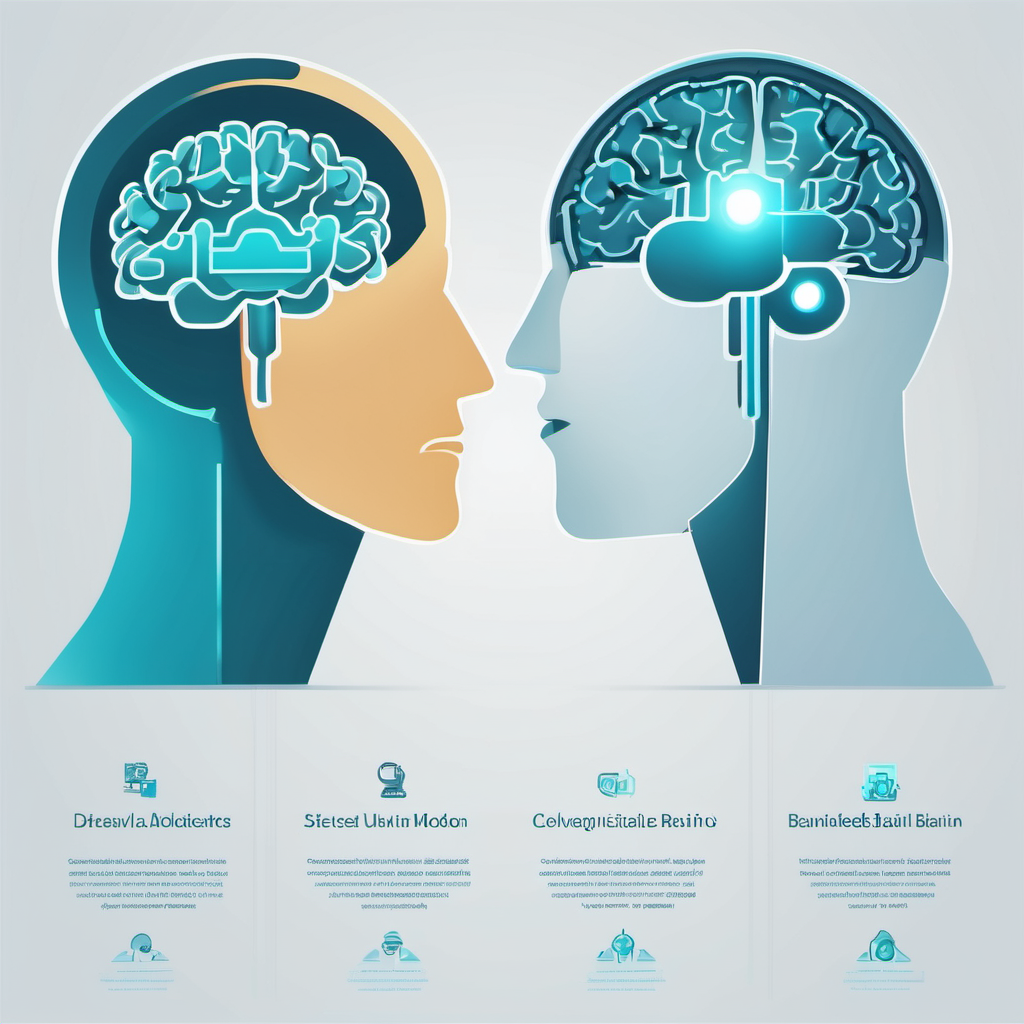
Recently, with the advent of "EEG foundation models" pre-trained on vast datasets, there's been growing anticipation for a universal brain decoder capable of interpreting diverse brain activities with a single model. The problem, however, is that the process of refining these foundation models for specific tasks (known as downstream learning) still remained a matter of "fine-tuning separately for each task." This static approach, where learning becomes fixed once completed, prevented knowledge from flowing between tasks.
This is precisely why EvoBrain is special. The research team redefined this downstream learning process entirely as a "cross-task continual learning problem." And to the best of their knowledge, this research is the first to genuinely pioneer cross-task continual learning in the EEG domain.
How Was the Research Conducted?
At the heart of continual learning always lies a dilemma: the "tug-of-war between flexibility and stability" we discussed at the beginning, technically known as the plasticity-stability trade-off.
Let me elaborate a bit. For AI to learn new tasks effectively, it must be able to flexibly adapt itself (plasticity). But if it changes too flexibly, "catastrophic forgetting" occurs, where it forgets what it learned previously. Conversely, if it stiffens too much to preserve old knowledge (stability), it cannot learn new things. Satisfying both simultaneously is the perpetual challenge of continual learning.

EvoBrain resolves this dilemma with two key tools. Let's explore each one gently.
Tool One: Neuro-Spectral Task Normalization (NSN)
The first is NSN (Neuro-Spectral Task Normalization). The name is long and complex, isn't it? Let's break it down with an analogy.
EEG characteristics vary quite a bit from task to task. In some tasks, specific frequency bands of brainwaves stand out, while in others, entirely different patterns appear – much like how people have different speaking styles and accents. When a new task arrives, NSN aligns the statistical properties of this new task with the accumulated statistics from past tasks. Simultaneously, it re-calibrates the frequency responses to remain robust against situations where distributions shift or neuro-spectral patterns become misaligned (distributional and neuro-spectral shifts). It acts like a friendly interpreter who, upon a new guest's arrival, naturally adjusts by thinking, "Ah, this person uses this kind of speech pattern."
Tool Two: Response-Affinity Distillation (RAD) and Time-Dependent Replay
The second is RAD (Response-Affinity Distillation), accompanied by "time-dependent replay."
The term 'distillation' might be unfamiliar, but in the AI field, it refers to a technique for transferring knowledge from an existing model to a new one. RAD helps preserve the "response geometry" that the model exhibited in old tasks. Simply put, it remembers how the EEG AI reacted when it performed tasks it was good at previously.
Furthermore, RAD selectively facilitates knowledge transfer between tasks that are "spectrally compatible" – meaning they have similar frequency characteristics. This allows tasks with similar underlying patterns to help each other. And time-dependent replay mitigates forgetting by appropriately revisiting past experiences, much like how occasionally reviewing old memories helps them stick around longer.
Thus, the core of EvoBrain lies in these two tools, NSN and RAD, working hand-in-hand to find a delicate balance point in the tug-of-war between flexibility and stability.
Key Findings
So, did EvoBrain actually work well? The research team conducted extensive evaluations across six distinct BCI tasks. Here's a summary of the results:
First, EvoBrain consistently outperformed existing state-of-the-art methods across various foundation model backbones. It's impressive that it wasn't just momentarily good on one specific base model, but performed well across different types of base models.
Second, it successfully struck the balance between flexibility and stability, as discussed earlier. It managed to simultaneously learn new tasks and not forget old ones.
Third, to the best of the researchers' knowledge, this study pioneers cross-task continual learning in the EEG domain. It marks a step towards an integrated brain decoding system that can interpret everything with a single model, a so-called "one-for-all" approach.
To reiterate, the information presented in this article is based entirely on facts contained in the paper's abstract. Specific numerical values or accuracy percentages were not explicitly stated in the abstract, so they have not been arbitrarily fabricated here. However, the broad strokes – "six distinct tasks," "outperformed state-of-the-art methods," and "first attempt in this field" – clearly represent significant achievements.
What Does This Mean for My Life?
You might be thinking, "What does it matter to me if an EEG AI learns well without forgetting?" In fact, the direction of this research is quite close to our daily lives.
Until now, each function utilizing EEG has been a separate device or program, operating independently. A drowsiness detector here, a concentration monitor there, a sleep analyzer somewhere else. If technology like EvoBrain matures, someday a single system might be able to handle various brain-related functions together, and get progressively better at it over time.
Moreover, this technology is highly significant because "adding new functions doesn't break existing ones." Just as our smartphones continue to run existing apps smoothly after updates, if EEG devices can learn new applications while retaining familiar functions, they would become much more useful and long-lasting companions.
Of course, it's still in the research phase. It has undergone academic evaluation across six tasks; it's not a product that does everything on our wrist or head right now. Nevertheless, it's a meaningful step forward, demonstrating that the grand vision of "one device, multiple uses" is scientifically possible.
Exploring with LINK BAND
LINK BAND 2.0 is a wearable device that measures EEG, photoplethysmography (PPG), and movement (ACC) simultaneously. It's designed to allow you to easily measure the very brainwaves discussed in today's research in your daily life.
The future EvoBrain envisions – "handling multiple brain tasks with a single model" – is particularly well-suited for wearable devices. How wonderful would it be if a small device worn lightly on your wrist or forehead could learn an increasing variety of applications over time? However, I must be completely honest here: the achievements of this paper are academic results from a research lab, and it by no means implies that LINK BAND incorporates this paper's algorithms or provides medical diagnoses.
The value LINK BAND can offer right now is more modest yet clear: the experience of directly feeling how your brainwaves change throughout the day, and how signals differ when you're focused versus when you're resting. This "habit of observing your own body" is precisely the solid foundation that will enable us to better understand and utilize advanced research like EvoBrain when it eventually comes into our lives. While research paints a grand future, its beginning stems from the small curiosity of looking into your own signals today.

And one more thing: the act of consistently collecting data itself resembles the future "one-for-all" technology. Today's records become the basis for better understanding tomorrow's self, and new insights gradually accumulate on top. Just as EvoBrain builds new capabilities upon past knowledge without forgetting, our self-observation also forms a meaningful picture only when we continue to connect daily data without forgetting.
Small Experiments You Can Try Starting Today
Even without elaborate equipment, you can directly experiment with EvoBrain's theme of "learning continuously without forgetting" in your daily life. Here are some easy things you can try:
First, create a "review old + learn new" routine. On days you're learning something new, spend just 5 minutes before you start gently recalling something you learned previously. Just as EvoBrain's replay revisits past experiences, our brains also retain memories much longer with brief reviews.
Second, observe your concentration rhythm. Jot down when you concentrate well and when your focus wavers throughout the day. Even a week of notes might reveal a faint "neuro-spectral pattern" of your own. Like NSN adapting to you, this is the first step in getting to know yourself.
Third, learn similar things together. Just as RAD facilitates knowledge exchange between compatible tasks, studying related topics together makes learning much easier. It's like grouping words from similar language families when learning a new language.
Fourth, don't change too much at once. Just as EvoBrain carefully aligns and calibrates itself when taking on new tasks rather than completely overhauling itself, if we try to change everything at once when adopting new habits, even good old habits can easily crumble. Let one small change gradually settle in before moving on to the next. The balance between flexibility and stability isn't created by grand resolutions, but by these small adjustments in pace.
Fifth, keep a record of your changes. You are definitely different now than you were a month ago. If you briefly note down what you've newly learned and what you're still doing well, you can visually confirm that you're accumulating knowledge without forgetting. This small record gives you the courage to continue your next learning.
- What is an EEG Foundation Model? The Idea of Reading Diverse Brain Signals with a Single AI
- Catastrophic Forgetting: Why AI Forgets What It Learns and How to Overcome It
- Plasticity and Stability: The Secret to Our Brain's Lifelong Learning
The Question This Research Poses to You
EvoBrain has brought us one step closer to machines "learning continuously without forgetting." But if we look closely at this story, one question ultimately returns to us:
As I learn new things, am I successfully preserving my valuable old abilities and memories? And in the tug-of-war between flexibility and stability within me, which way am I leaning right now? How about, starting today, you embrace one new thing while kindly reviewing one familiar thing? Perhaps we are all, in our own way, small evolving brains (EvoBrain) every single day.
LINK BAND Insight
LINK BAND 2.0 is a wearable device that measures EEG, PPG, and movement (ACC). Just as EvoBrain envisions a future of 'one device, multiple uses,' the small habit of observing your brainwaves daily can be the starting point for that future.
Related Articles
Train Your Brain Like a Muscle: What a 534-Citation Neuroscience Review Reveals About EEG Neurofeedback
The moment you open your eyes in the morning, smartphone notifications pour in. Work emails, KakaoTalk, Instagram alerts, news headlines… Your brain is bombarded with information as soon as you wake up. You sip your coffee and get ready for work, but your mind is already full of tangled thoughts. “I need to nail that presentation at today’s meeting…,” “I can’t focus—probably because I worked late last night.” Have you ever had this experience? Every day, we make countless decisions, process information, and regulate emotions. But how often do we actually check whether our brain is in optimal condition? What if we could train our brain, just as athletes train their muscles? To find answers to this question, neuroscientists around the world have been researching for decades. And one powerful tool that has emerged is EEG neurofeedback. Today, I want to introduce you to an influential review paper published in *Neuroscience and Biobehavioral Reviews*, cited 534 times. This paper goes beyond simply explaining brainwaves—it uses meta-analysis to examine specific protocols that can actually improve cognitive abilities and emotional states in healthy individuals. Let’s explore the scientific method that can upgrade your daily performance.

L-FAME: Longitudinal Focused Attention Meditation EEG Dataset and Benchmark
The world's largest meditation EEG dataset, collected from 103 participants across more than 70 meditation sessions, has been released. We explore how brainwaves change during meditation, what the increase in alpha and theta waves signifies, and how LINK BAND connects to this groundbreaking research.
Symbol Emergence in Cognitive Developmental Systems: a Survey
In the face of a daily deluge of information, how do we efficiently comprehend and learn about the world? This article introduces a cutting-edge study that explores how our brains and advanced AI systems construct 'meaningful symbols' from complex sensory data, mirroring a child's journey of discovery. Delve into the astonishing mechanisms your brain employs to process information and discover how LINK BAND can contribute to understanding and optimizing your cognitive capabilities.
Experience LINK BAND 2.0
Measure your brainwaves in real-time with integrated EEG, PPG, and ACC sensors. See for yourself what you read about today.
View Product→