Embodied Virtual Reality Feedback Reshapes Neural Representations to Support Continuous Three-Dimensional Motor Imagery Decoding
Niall McShane, Attila Korik, Karl McCreadie, Naomi Du Bois, Darryl Charles. “Embodied Virtual Reality Feedback Reshapes Neural Representations to Support Continuous Three-Dimensional Motor Imagery Decoding.” arXiv:2605.29677 [Submitted to Nature Biomedical Engineering]. View Paper ↗
Research shows that virtual reality (VR) can alter our brainwaves, enhancing 3D motor imagery abilities. This study explores how VR strengthens neural connections in the brain, thereby allowing us to better understand our motor skills.
What Does Our Brain Do Every Day? (Introduction)
After sitting at a desk all day at work, our bodies often feel stiff, and we sense a lack of exercise. Yet, when we actually try to exercise, we often give up because we lack time or the spatial luxury to go to the gym. For those of us whose days are packed just with commuting, 'consistent exercise' often feels like a task perpetually postponed.
But what if we could achieve the benefits of exercise without actually moving our bodies? More precisely, what if our brains changed similarly to actual exercise, merely by 'imagining exercising' within virtual reality (VR)? It might sound like something out of science fiction, but recent neuroscience research indicates this is no mere fantasy.
Even when our brains appear to be at rest, they are constantly sending and receiving electrical signals. We call this flow of signals 'brainwaves (EEG)'. What's fascinating is that the brainwave patterns when you actually lift your arm are strikingly similar to those when you 'vividly imagine lifting your arm'. The study we're about to introduce focuses precisely on this point, scientifically delving into how VR, as a tool, can enhance our motor imagery capabilities.
Why This Study is Special
This study precisely investigated how virtual reality (VR) feedback enhances an individual's '3D motor imagery' ability. Motor imagery refers to mentally rehearsing a specific movement without actually engaging the muscles, a technique that has long garnered attention in rehabilitation therapy and sports training.
Until now, such motor imagery training typically involved viewing a standard monitor screen. However, these researchers discovered that when participants performed the same imagery tasks in an immersive VR environment instead of on a flat screen, their brains reacted much more distinctly and strongly. This isn't just about "VR being more fun"; the key finding is that the brain's neural connections themselves were more robustly strengthened.
To draw an easy analogy, if imagining exercise while looking at a flat screen is like recalling a landscape from a black-and-white photo, then imagery in a VR environment is like standing directly in the middle of that landscape. Our brains operated in almost the same way as during actual physical movement when presented with a more immersive and realistic environment. This 'similarity to reality' is precisely the most crucial message this study conveys.
How Was the Study Conducted? (Methodology)
The researchers analyzed participants' brainwave data using a machine learning model called CNN-LSTM, which, despite its complex name, has an intuitive principle. CNN (Convolutional Neural Network) extracts meaningful 'spatial features' from EEG signals, while LSTM (Long Short-Term Memory Neural Network) reads the 'flow and context' of signals that change over time. By combining these two technologies, they were able to capture the hidden patterns of motor imagery within the constantly changing brainwaves with much greater precision.
The experimental procedure was as follows: Participants performed identical 3D motor imagery tasks under two conditions. One was a typical flat monitor (screen feedback) environment, and the other was a VR feedback environment where they wore a headset and immersed themselves in a 3D space. Since the same individuals experienced both conditions, it was possible to reduce errors due to individual differences and cleanly compare the effects created by the 'environmental difference' itself. 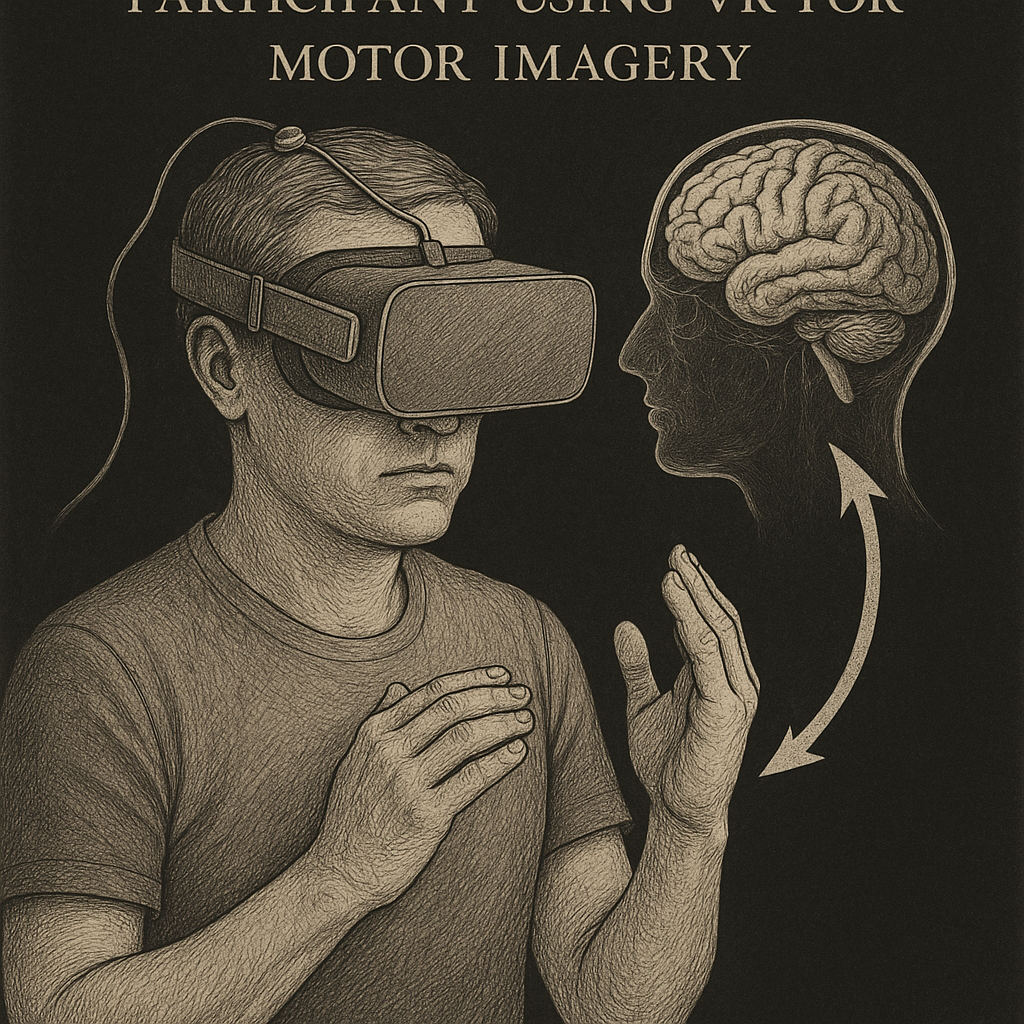
The results were clear. Motor imagery in the VR feedback environment showed a classification performance that was 8.9-13.0% higher than with screen feedback. This means that when people performed motor imagery in the VR environment, the signals contained in their brainwaves were clearer and more consistent, allowing the AI to much more accurately predict "what movement this person is imagining." This was not a measurement error but a statistically significant difference confirmed repeatedly.
Key Discovery: Brainwave Changes from VR Feedback
The most intriguing finding in this study lies in how the brain's activity patterns specifically changed. VR feedback strongly induced 'desynchronization' in the brain's 'sensorimotor-parietal region'. While "desynchronization" might sound complex, it simply means that a brain area typically at rest actively 'wakes up' as if saying, "Alright, ready to move!" This desynchronization phenomenon actually occurs just before we move our bodies, and the exact same signal was observed through VR imagery alone.
Furthermore, VR also strengthened the functional connectivity between the 'motor-frontal' regions. This means that the brain's anterior region, responsible for planning movements, and the motor region, which executes actual movements, began to work together more closely. It's akin to various instruments in an orchestra playing in greater harmony following the conductor's signals, signifying improved cooperation among different brain areas. 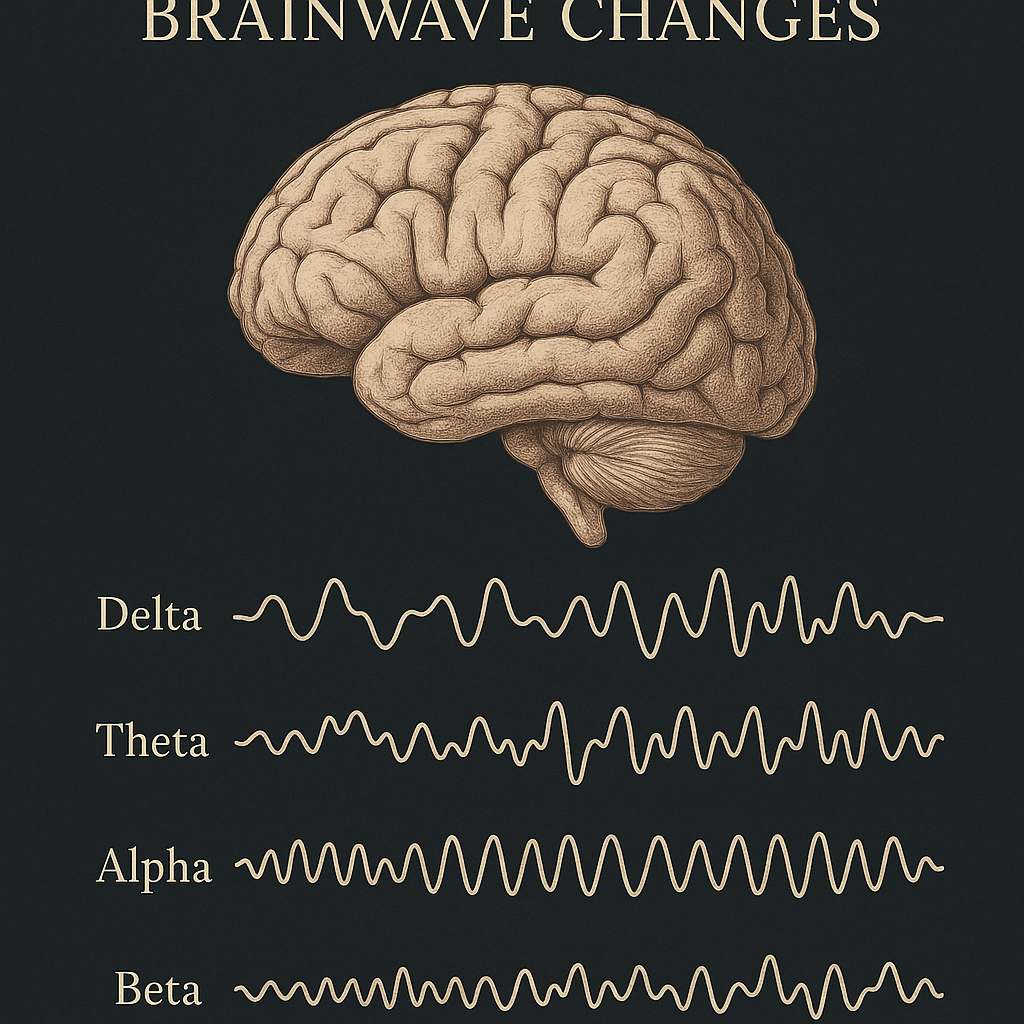
The most astonishing aspect is that all these changes were remarkably similar to the brainwave changes observed during actual physical movement. In other words, if you immerse yourself sufficiently in VR to imagine exercise, from the brain's perspective, it becomes an experience difficult to distinguish from 'actually exercising'. This provides strong neuroscientific evidence supporting why motor imagery training is effective for rehabilitation and motor learning.
What Does This Mean for My Life?
We invest considerable time and money to enhance our physical abilities and maintain health. However, for those who are injured, have mobility issues, or are simply too busy to exercise, the advice "just exercise diligently" often feels hollow.
This study opens doors to new possibilities for precisely these individuals. By using VR to alter brainwaves, we can activate and strengthen neural circuits involved in movement through motor imagery alone, without intense physical exertion. For instance, a patient undergoing post-surgery rehabilitation who cannot yet freely use their arm could combine VR motor imagery training to keep the brain's motor circuits 'active' even while unable to directly use their muscles. Athletes could also use it as supplementary training during injury recovery to prevent losing their feel for the game. 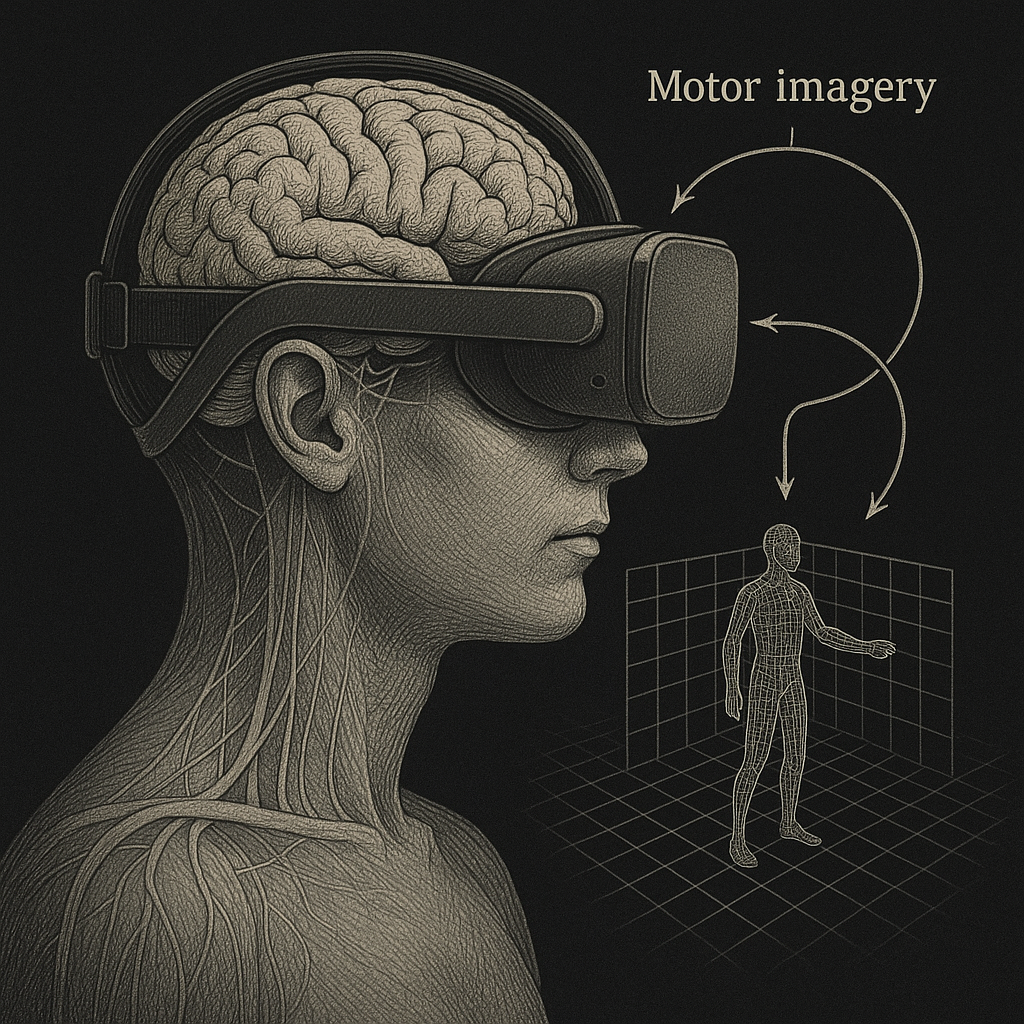
Of course, this doesn't mean VR motor imagery can completely replace actual exercise. However, its significance is considerable simply as a complementary method to gain some of the benefits of exercise without time and location constraints, or despite physical limitations. The era where anyone can train their brain in their own way—on the subway commute, or in bed before sleep—is steadily approaching.
See for Yourself with LINK BAND
Reading this far, you might be wondering, "So, will my brain really change like that too?" These brainwave changes are no longer only verifiable with specialized lab equipment. LINK BAND conveniently measures biosignals, including EEG (electroencephalography), in everyday life, allowing you to visually observe your brainwave changes in real-time.
Like the expensive equipment used by the researchers, LINK BAND also captures and shows the changes occurring in your sensorimotor region when you imagine movement. You can directly compare how your brainwaves actually differ when viewing a screen versus using VR, not as an abstract theory, but with your own data. Especially when combined with VR content, you'll be able to experience the clearer and stronger brain responses, just as this study demonstrated. 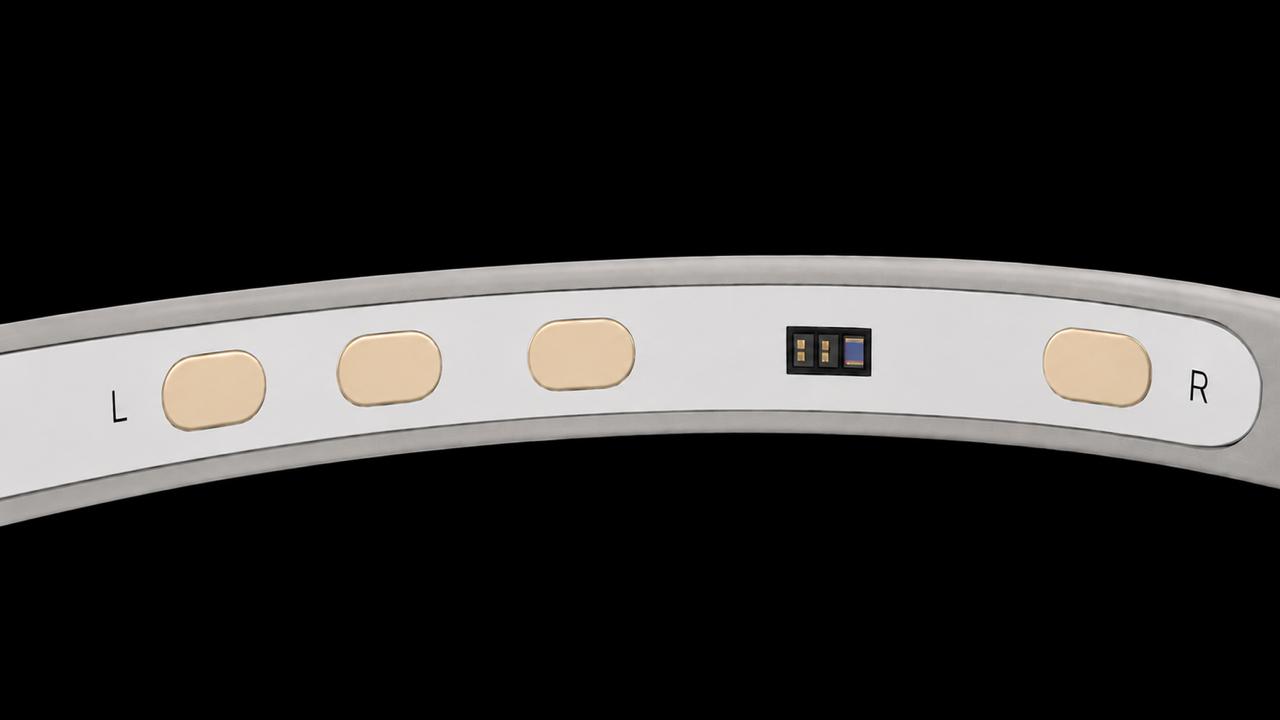
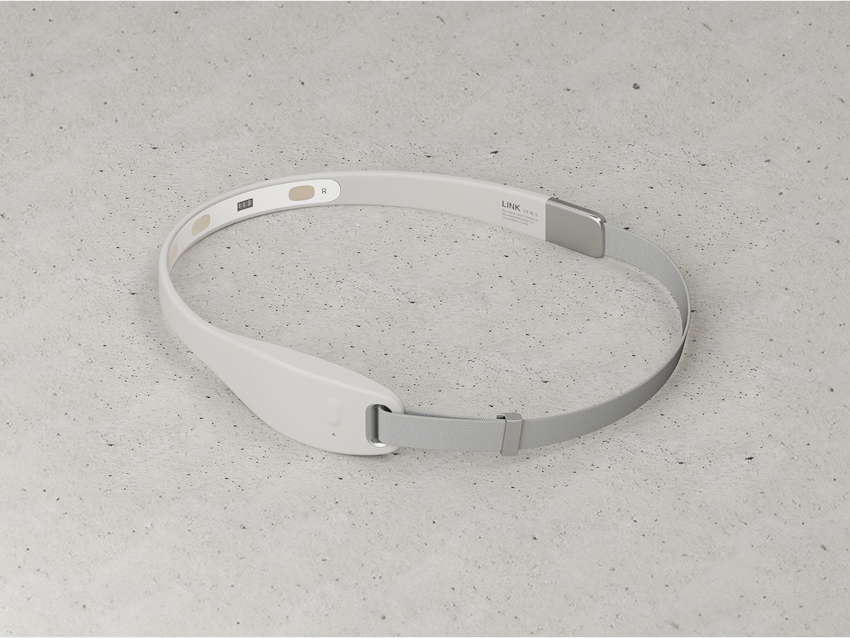
The experience of seeing your brain state as objective numbers and graphs is more powerful than you might think. The moment you confront data showing "my brain is reacting like this right now," rather than vaguely feeling "I seem to be focusing well," motor imagery training becomes much more motivating and easier to sustain.
A Small Experiment You Can Try Starting Today
You don't need elaborate preparations. Starting today, try motor imagery for 5 minutes a day in a VR or immersive environment. The method is simple: sit comfortably, close your eyes, choose a favorite exercise movement, and visualize it as vividly as possible. The key is not just to 'see' it, but to feel the muscle tension, the weight of the movement, and the rhythm of your breathing, as if you were actually doing it.
At first, the images might be blurry, and concentration difficult. But just like muscle training, motor imagery becomes clearer and stronger with repetition. After just a few days of consistent practice, you'll start to feel the movements in your mind becoming increasingly vivid. If you use LINK BAND alongside this, you can accurately measure whether your brainwaves are actually changing during your imagination, objectively assessing the training's effectiveness. Why not start this small experiment today—verifying your progress with data, not just vague feelings?
- "Brainwaves and Motor Skills: New Possibilities"
- "The Impact of Virtual Reality on Our Cognitive Abilities"
Questions This Study Poses to You
If virtual reality can change our brains to improve motor skills, much like actual exercise, how will we utilize this technology in the future? As a tool to aid rehabilitation patients, a supplementary training method for athletes, or a new health management approach for busy modern individuals—the possibilities are endless.
And here's a final question for you: If you could train your brain just by imagining, what change would you most want to experience first through VR and brainwave measurement technology? Begin the journey to find that answer by looking directly into your own brainwaves.
LINK BAND Insight
The research finding that virtual reality can strengthen neural connections in the brain and enhance motor imagery abilities is highly intriguing. It presents a novel way to experience the benefits of exercise without the constraints of time and space. With devices like LINK BAND, real-time brainwave changes can be observed, which could potentially lead to the development of personalized motor imagery programs.
Related Articles
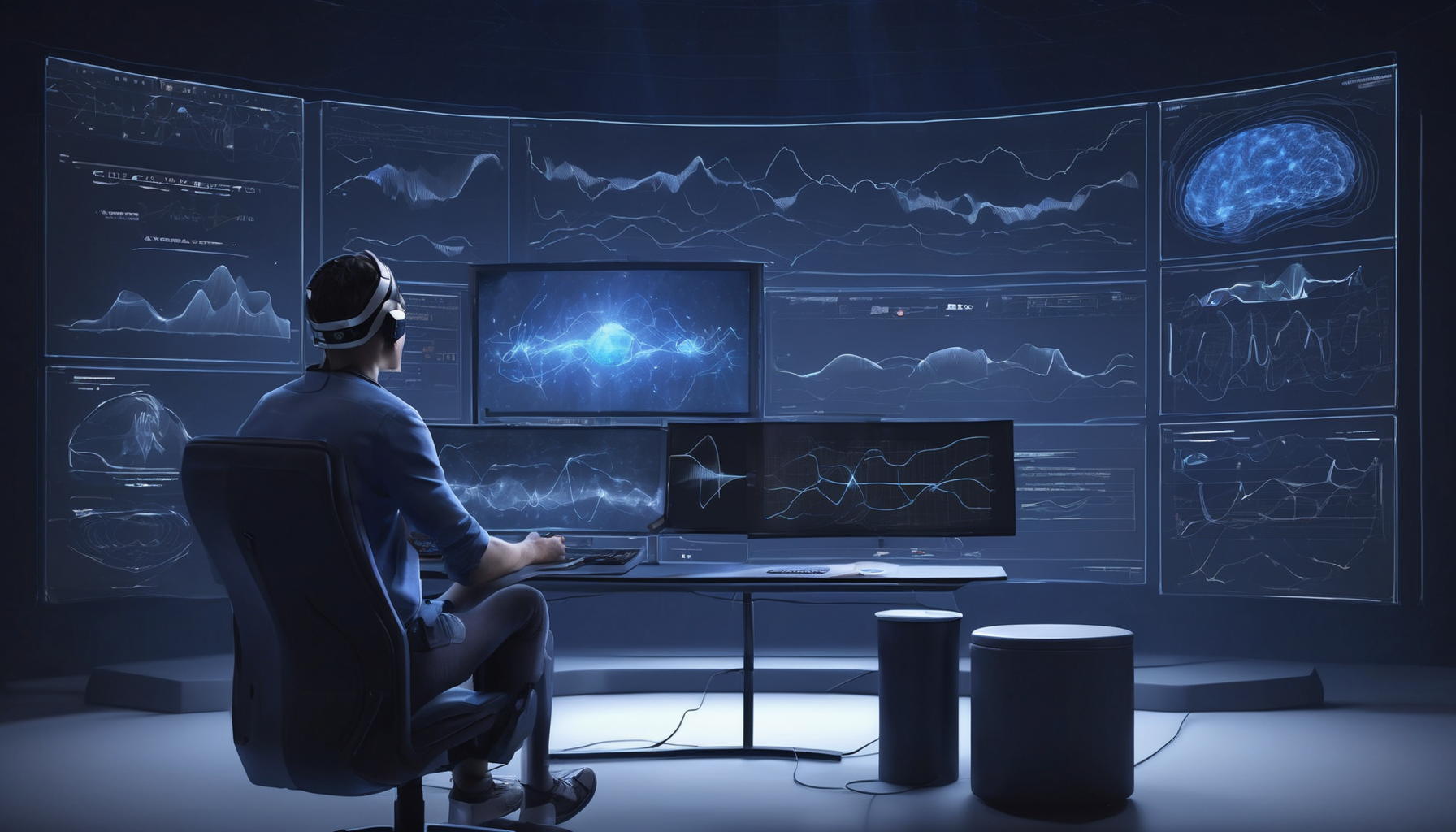
Train Your Brain Like a Muscle: What a 534-Citation Neuroscience Review Reveals About EEG Neurofeedback
The moment you open your eyes in the morning, smartphone notifications pour in. Work emails, KakaoTalk, Instagram alerts, news headlines… Your brain is bombarded with information as soon as you wake up. You sip your coffee and get ready for work, but your mind is already full of tangled thoughts. “I need to nail that presentation at today’s meeting…,” “I can’t focus—probably because I worked late last night.” Have you ever had this experience? Every day, we make countless decisions, process information, and regulate emotions. But how often do we actually check whether our brain is in optimal condition? What if we could train our brain, just as athletes train their muscles? To find answers to this question, neuroscientists around the world have been researching for decades. And one powerful tool that has emerged is EEG neurofeedback. Today, I want to introduce you to an influential review paper published in *Neuroscience and Biobehavioral Reviews*, cited 534 times. This paper goes beyond simply explaining brainwaves—it uses meta-analysis to examine specific protocols that can actually improve cognitive abilities and emotional states in healthy individuals. Let’s explore the scientific method that can upgrade your daily performance.
L-FAME: Longitudinal Focused Attention Meditation EEG Dataset and Benchmark
The world's largest meditation EEG dataset, collected from 103 participants across more than 70 meditation sessions, has been released. We explore how brainwaves change during meditation, what the increase in alpha and theta waves signifies, and how LINK BAND connects to this groundbreaking research.
Symbol Emergence in Cognitive Developmental Systems: a Survey
In the face of a daily deluge of information, how do we efficiently comprehend and learn about the world? This article introduces a cutting-edge study that explores how our brains and advanced AI systems construct 'meaningful symbols' from complex sensory data, mirroring a child's journey of discovery. Delve into the astonishing mechanisms your brain employs to process information and discover how LINK BAND can contribute to understanding and optimizing your cognitive capabilities.
Experience LINK BAND 2.0
Measure your brainwaves in real-time with integrated EEG, PPG, and ACC sensors. See for yourself what you read about today.
View Product→