Misalignment Between Backpropagation and the Hierarchy of Brain Responses to Images
Joséphine Raugel, Maximilian Seitzer, Marc Szafraniec, Huy V. Vo, Jérémy Rapin. “Misalignment Between Backpropagation and the Hierarchy of Brain Responses to Images.” arXiv:2605.28693. View Paper ↗
A study has revealed how the brain and artificial intelligence process images differently. While the brain processes visual information dynamically across time and space, AI's learning algorithms are unable to replicate this. This difference highlights a fundamental distinction between our brains and AI.
Close your eyes and imagine: a baby learning the word 'dog' for the first time. When a mother points to a fluffy creature and says, "That's a dog," the child quickly recognizes countless types of dogs after just a few experiences. In contrast, artificial intelligence barely recognizes a dog even after being fed thousands of photos and labeled data. Why this difference? The secret lies in their 'learning methods'. While AI learns through backpropagation, a mathematical optimization technique, research has shown that the human brain understands the world using entirely different principles. The paper we're introducing today presents a fascinating story, experimentally demonstrating this very difference in visual processing.
Backpropagation and the Brain's Learning Mechanisms
A representative learning method used by artificial intelligence to recognize images is 'Backpropagation'. Simply put, if an AI misidentifies a cat photo as a 'dog,' it calculates the error and propagates it backward through each layer of the network, incrementally adjusting connection strengths. It's similar to cooking: if the seasoning is bland, you adjust the ingredient ratios from the end, like adding a bit more salt. This method is mathematically elegant and delivers astonishing performance with large datasets.So, does our brain learn in the exact same way as backpropagation? For a long time, many scientists hypothesized that, given the brain's hierarchical structure, this was highly probable. However, this new research strongly questions that hypothesis. When visual information enters the human brain, there's a hierarchical structure: early stages like V1 and V2 detect simple lines or orientations, and as it progresses to V4 and the temporal lobe, it processes complex shapes, faces, and even the meaning of objects. But when learning along this hierarchy, it's highly probable that the brain uses a much more organic approach, blending prediction, attention, and emotion, rather than sending mathematically precise error signals to earlier stages like AI. Simply put, the brain is less like a GPS precisely correcting its route and more like a hiker ascending a mountain, sensing the overall terrain as they advance.
Key Findings
To verify this difference, the research team mobilized fMRI (functional Magnetic Resonance Imaging) and MEG (Magnetoencephalography) data. For reference, fMRI measures changes in blood flow within the brain, precisely showing which areas are spatially activated, while MEG measures the electrical activity of neurons, capturing rapid temporal dynamics down to milliseconds. Using both techniques together allows us to understand the brain's 'when and where' with near-perfect accuracy. In the study, participants were shown various natural scene images, and the responses across their entire visual cortex were precisely recorded. Concurrently, the same images were fed into state-of-the-art artificial neural networks, and the gradients (i.e., error backpropagation signals) generated in each layer of the network were separately collected. Then, the similarity between the signals from these two systems was mathematically compared.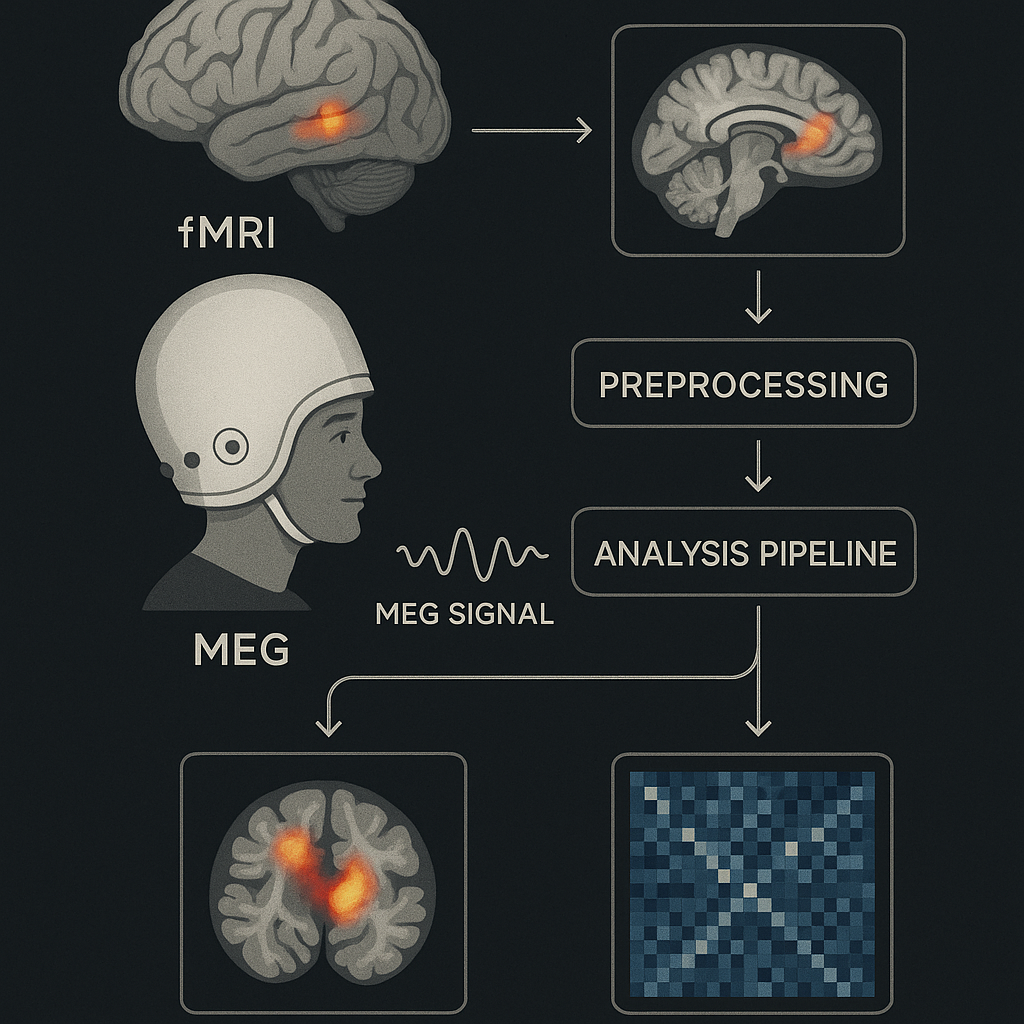
The results revealed a truly astonishing pattern. In the low-level areas where visual information first arrives (primary visual cortex), AI's gradients and the brain's responses showed considerable agreement. It was as if both systems similarly processed basic information like, 'There's a diagonal here,' or 'This part is blue.' However, as visual information was increasingly transmitted to higher-level areas for identifying objects and their meanings, AI's gradients diverged more and more from the brain's responses. Especially in the high-level visual cortex, which recognizes faces and scenes, the two signals told entirely different stories. This implies that even the best-performing deep learning models are far removed from the principles by which the human brain processes high-level information.
AI Learning Methods vs. Brain Processing Mechanisms
This finding—that AI's gradients were effective in predicting brain responses in low-level areas but failed to properly reflect high-level cognitive processing—sends a rather significant message. For instance, consider the object 'cup'. AI detects the cup's round rim or the curve of its handle, then reduces error via backpropagation until it reaches a conclusion like '98% probability of being a cup'. However, when our brain sees a cup, it doesn't just classify its form; it also activates associated experiences and emotions, such as 'the warm tea I drank earlier' or 'this cup was a gift'. The brain, in essence, performs integrated processing that goes beyond simple error correction, synthesizing context, memory, and prediction.To draw an analogy from everyday life: Backpropagation is like a car navigation system precisely correcting you with "Make a U-turn in 100m" if you deviate from the current road. In contrast, the brain's learning is similar to driving on the same road but appreciating the surrounding scenery, recalling memories of previous trips, and flexibly deciding, "Ah, this road eventually leads to that town, so I can just keep going straight." This flexibility might just be the wellspring of our brain's creativity and intuition.
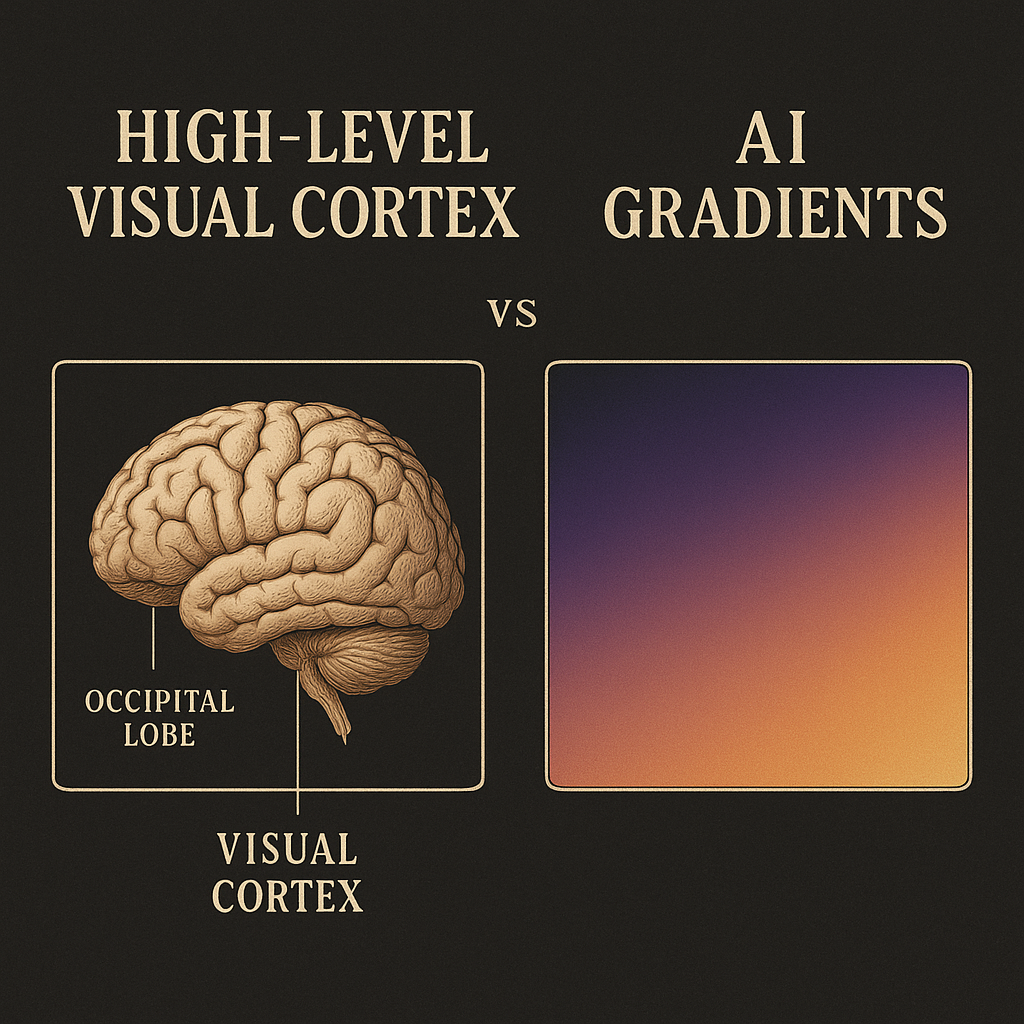
These differences also present a significant challenge for AI researchers. Models that solely learn through backpropagation, no matter how much data they're fed, are likely to struggle in fully catching up to the human brain's insight and contextual understanding. In the future, new learning algorithms that more deeply mimic the brain's neural circuits (e.g., spike-timing-dependent plasticity, predictive coding) will be needed. Concurrently, neuroscientists, through this research, could reconfirm that artificial neural network gradients should not be indiscriminately used as models for brain neural signals.
Experience it Yourself with LINK BAND
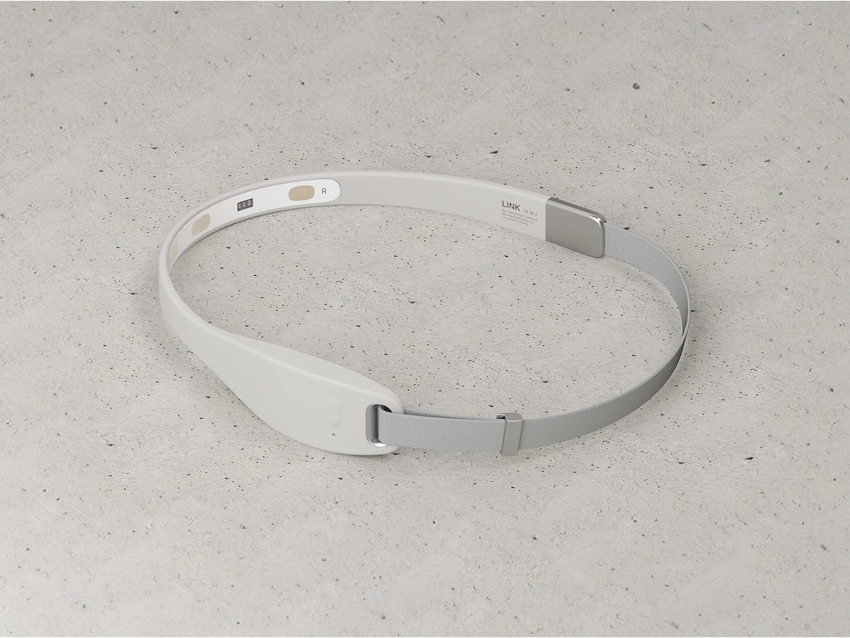
After reading this far, aren't you curious, "How does my own brain learn?" Now, you can experience a bit of that answer. Using wearable EEG devices like LINK BAND, you can observe in real-time what rhythms your brain exhibits during meditation, concentration, or stress. Just like the research findings suggest, our brains interpret the world every moment with unique and flexible processing methods that are entirely different from AI. By consistently observing and understanding your own brain activity through meditation or concentration training, you can gradually unravel the secrets of 'human-like learning,' a different dimension from artificial intelligence. Start your journey into your brain today.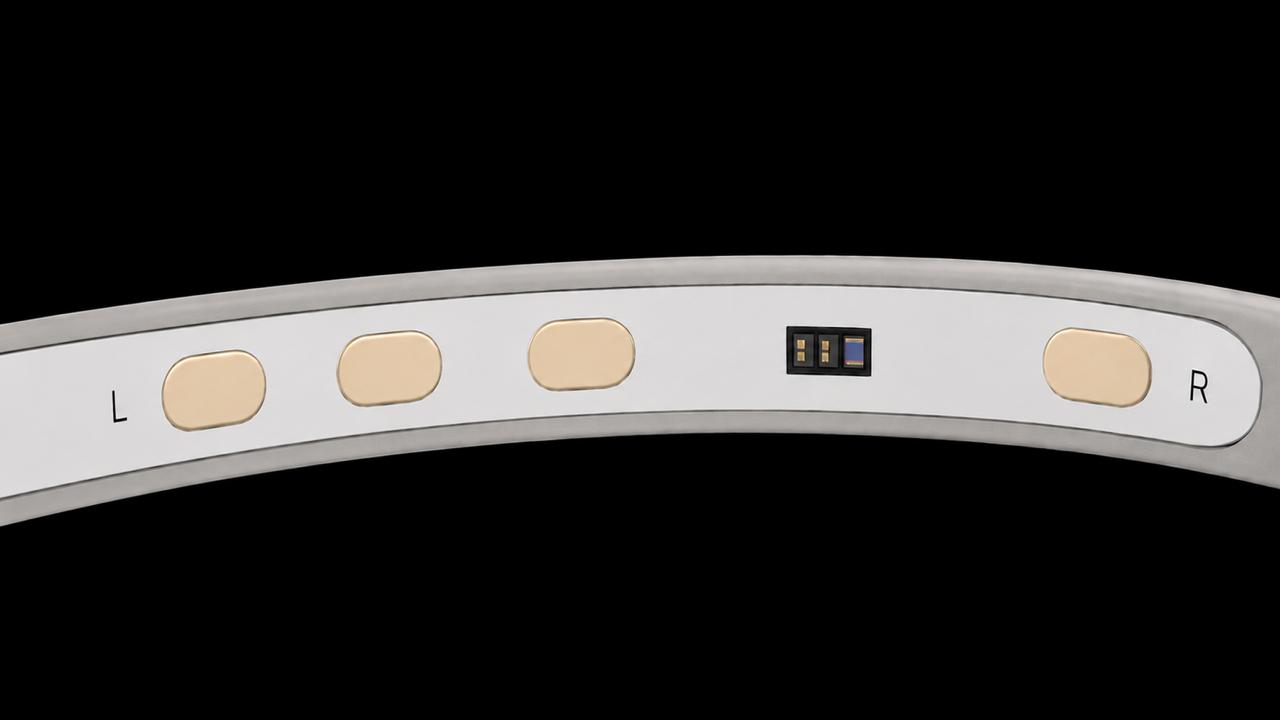
LINK BAND Insight
This study reveals fundamental differences in how artificial intelligence and the human brain process information. While the brain processes visual information dynamically across time and space, AI's learning algorithms fail to replicate this. This could suggest new directions for AI development.
Related Articles
Train Your Brain Like a Muscle: What a 534-Citation Neuroscience Review Reveals About EEG Neurofeedback
The moment you open your eyes in the morning, smartphone notifications pour in. Work emails, KakaoTalk, Instagram alerts, news headlines… Your brain is bombarded with information as soon as you wake up. You sip your coffee and get ready for work, but your mind is already full of tangled thoughts. “I need to nail that presentation at today’s meeting…,” “I can’t focus—probably because I worked late last night.” Have you ever had this experience? Every day, we make countless decisions, process information, and regulate emotions. But how often do we actually check whether our brain is in optimal condition? What if we could train our brain, just as athletes train their muscles? To find answers to this question, neuroscientists around the world have been researching for decades. And one powerful tool that has emerged is EEG neurofeedback. Today, I want to introduce you to an influential review paper published in *Neuroscience and Biobehavioral Reviews*, cited 534 times. This paper goes beyond simply explaining brainwaves—it uses meta-analysis to examine specific protocols that can actually improve cognitive abilities and emotional states in healthy individuals. Let’s explore the scientific method that can upgrade your daily performance.
L-FAME: Longitudinal Focused Attention Meditation EEG Dataset and Benchmark
The world's largest meditation EEG dataset, collected from 103 participants across more than 70 meditation sessions, has been released. We explore how brainwaves change during meditation, what the increase in alpha and theta waves signifies, and how LINK BAND connects to this groundbreaking research.
Symbol Emergence in Cognitive Developmental Systems: a Survey
In the face of a daily deluge of information, how do we efficiently comprehend and learn about the world? This article introduces a cutting-edge study that explores how our brains and advanced AI systems construct 'meaningful symbols' from complex sensory data, mirroring a child's journey of discovery. Delve into the astonishing mechanisms your brain employs to process information and discover how LINK BAND can contribute to understanding and optimizing your cognitive capabilities.
Experience LINK BAND 2.0
Measure your brainwaves in real-time with integrated EEG, PPG, and ACC sensors. See for yourself what you read about today.
View Product→