Can We Read the Brain While Moving? — The WearBCI Challenge
Haoxian Liu, Hengle Jiang, Lanxuan Hong, Xiaomin Ouyang. “WearBCI Dataset: Understanding and Benchmarking Real-World Wearable Brain-Computer Interfaces Signals.” ACM Conference on Embedded Networked Sensor Systems (SenSys), 2026. View Paper ↗
EEG measurement typically begins with 'sitting still with eyes closed.' However, reality is a constant stream of movement. The WearBCI dataset has emerged, capturing EEG signals from 30 participants while they walked, climbed stairs, and even brushed their teeth. This research, accepted at ACM SenSys 2026, thoroughly dissects the biggest hurdles wearable BCIs face outside the laboratory.
Imagine waking up, putting on a headband, and meditating for a moment. When you ask, "How's my condition today?", an app analyzing your brainwave data advises, "Your sleep was shallow last night. Your focus might be 15% lower than usual today." Then, you keep the band on as you commute, drive, work in the office, and walk to lunch, continuously recording your brain state. This is the future envisioned by wearable BCIs (Brain-Computer Interfaces). But there's a critical problem: 'movement'. Every time we walk, turn our heads, or speak, our brainwave signals get drowned out by all sorts of noise.
Why This Research is Special
Most EEG research measures brainwaves by having participants 'sit still with their eyes closed' to avoid this noise. This is a perfectly controlled laboratory environment. But that's not reality. We're not statues sitting still; we're living humans who walk, laugh, talk, and scratch our heads. Yet, most existing wearable EEG datasets begin with "Participants sat in a comfortable chair with their eyes closed..." You can see how disconnected this is from the real world, right?This is where WearBCI steps in, an attempt to bridge that gap. Created by researchers in China and Hong Kong, this dataset measured brainwaves from 30 participants performing 13 different 'real-life activities.' This included walking, climbing stairs, typing, and even brushing their teeth. It literally captured 'brainwaves in daily life.' This paper was accepted at ACM SenSys 2026, the most prestigious conference in sensor systems. This acceptance is proof of how seriously the sensor industry views this challenge.
How Was the Research Conducted?
The researchers meticulously designed their experiment.13 Everyday Activities
Participants wore commercially available wearable EEG devices, not expensive research-grade equipment. They then performed the following activities in sequence: sitting still (baseline), walking (slowly/quickly), climbing up and down stairs, typing, using a smartphone, reading a book, listening to music, brushing teeth, carrying and moving objects, and finally, resting by sitting still again. Throughout this entire process, they thoroughly recorded how brainwaves changed, where noise originated, and which movements most severely degraded the signal.
Unveiling the Nature of Noise
The researchers didn't just collect data; they categorized the types of noise generated during each activity. Walking produced regular impact noise every time a foot touched the ground, while brushing teeth introduced electromyography (EMG) noise from arm and jaw muscle movements leaking into EEG channels. Typing was affected by a combination of finger movements and keyboard sounds. This systematic organization of 'what kind of noise occurs how severely during which activity' is a first.Benchmark: Which Algorithms Are Robust in Real-World Scenarios?
Another key contribution is the 'benchmark.' WearBCI is not just a dataset; it's also an evaluation platform for testing eight representative BCI algorithms (deep learning-based, traditional signal processing-based, hybrid approaches, etc.) with real-life data. The researchers numerically demonstrated that an algorithm showing 92% accuracy with laboratory data could drop to 67% with walking data and plunge to 51% with stair-climbing data.Key Findings: How Much Does Movement Degrade EEG Signals?
The most striking discovery of the paper is this: even the best-performing BCI algorithms currently available experience an average performance drop of over 35% when taken outside the lab. It was also revealed that leg movements (walking, stairs) interfere with brainwave signals much more severely than arm movements (typing, smartphone use). This means that just because a device is 'worn on the head' doesn't mean it's immune to the effects of torso or leg movements. The human body is an interconnected system, after all.Furthermore, significant individual differences were a crucial finding. Depending on hair thickness, scalp condition, sweat production, and even the development of forehead muscles, the level of noise varied by up to three times for the same activity. This implies that personalized calibration is far more important than a "one-size-fits-all" universal algorithm.
What Does This Have to Do With My Life?
The true significance of this research lies beyond technical figures. What we truly want isn't a device that's "smart only in the lab," but one that "genuinely helps us in our daily lives." A quiet companion that can be with us throughout our entire lives – when we wake up for meditation, during our commute, at work, exercising, and before sleep – not just measuring for an hour out of 24. WearBCI has precisely identified one of the biggest boulders on the path to such a future: the challenge of 'extracting reliable signals even amidst movement.'A Look at LINK BAND
LINK BAND 2.0 is also a wearable thoughtfully designed with this very problem in mind. Its four gold metallic EEG electrode pads are strategically placed to conform stably to the forehead's contours, maintaining consistent contact not only when sitting still but also when walking or turning your head. Additionally, it integrates both a PPG (heart rate) sensor and a 6-axis ACC (accelerometer) sensor, collecting not just brainwave data but also heart rate and body movement data simultaneously. By examining these multiple signals together, it becomes much more accurate to distinguish "whether this brainwave change is a genuine shift in brain state or simply noise caused by body movement."
If the WearBCI research demonstrated with data "how difficult and important stable EEG measurement in everyday environments is," then LINK BAND is a tool designed precisely for that everyday life. Its goal is to capture data from your real life—during your morning meditation, on your commute, or in bed before sleep—not just in a laboratory.
A Small Experiment You Can Try Today
Even without expensive equipment, there's a fun experiment you can try starting today: 'Observing the Impact of Movement on Your Brain.'Step 1: First thing in the morning, sit in bed, close your eyes, and stay still for one minute. Notice how quiet your mind is, or if it's buzzing with thoughts.
Step 2: Now, slowly walk around your home for one minute and observe your mental state in the same way. Do your thoughts become more organized while walking? Or do you feel more distracted?
Step 3: Finally, try going up and down stairs or lightly jumping in place. You'll likely experience your thoughts temporarily disappearing as you focus on your bodily sensations.
Even this simple experiment allows you to physically experience the core message of the WearBCI research. The brain is never separate from the body. When the body moves, the brain moves with it. Having a device like LINK BAND would make observing these changes firsthand even more fascinating, wouldn't it?
The Question This Research Poses to You
We move all day long. We walk, talk, work, and exercise. Throughout all that movement, our brains continuously send signals. WearBCI is research that directly challenges the question, "Can we truly read those signals?" And while the answer isn't perfect yet, it's certainly leaning towards 'yes.' Perhaps the more important question is this: By understanding the signals from our brains, what kind of life do we want to live?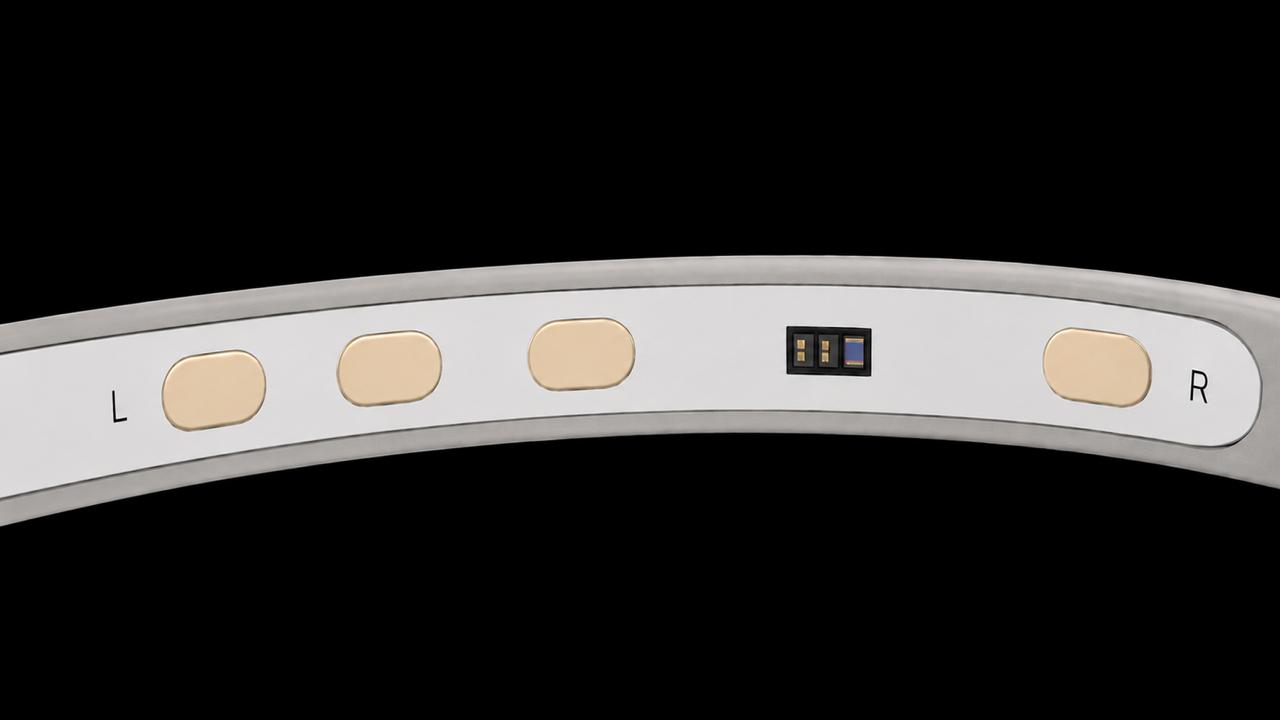
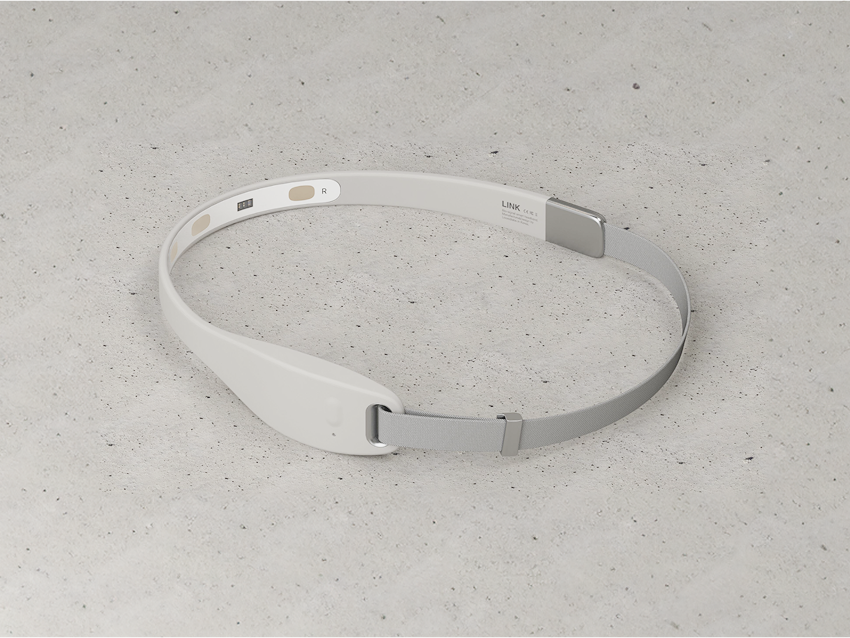
LINK BAND Insight
As WearBCI has proven, real-world brainwaves exist amidst movement. LINK BAND 2.0's combination of four gold EEG electrodes + PPG + ACC sensors is designed precisely to capture these 'everyday signals.' Its goal is to collect data from your life, not just from a lab.
Related Articles
Train Your Brain Like a Muscle: What a 534-Citation Neuroscience Review Reveals About EEG Neurofeedback
The moment you open your eyes in the morning, smartphone notifications pour in. Work emails, KakaoTalk, Instagram alerts, news headlines… Your brain is bombarded with information as soon as you wake up. You sip your coffee and get ready for work, but your mind is already full of tangled thoughts. “I need to nail that presentation at today’s meeting…,” “I can’t focus—probably because I worked late last night.” Have you ever had this experience? Every day, we make countless decisions, process information, and regulate emotions. But how often do we actually check whether our brain is in optimal condition? What if we could train our brain, just as athletes train their muscles? To find answers to this question, neuroscientists around the world have been researching for decades. And one powerful tool that has emerged is EEG neurofeedback. Today, I want to introduce you to an influential review paper published in *Neuroscience and Biobehavioral Reviews*, cited 534 times. This paper goes beyond simply explaining brainwaves—it uses meta-analysis to examine specific protocols that can actually improve cognitive abilities and emotional states in healthy individuals. Let’s explore the scientific method that can upgrade your daily performance.
L-FAME: Longitudinal Focused Attention Meditation EEG Dataset and Benchmark
The world's largest meditation EEG dataset, collected from 103 participants across more than 70 meditation sessions, has been released. We explore how brainwaves change during meditation, what the increase in alpha and theta waves signifies, and how LINK BAND connects to this groundbreaking research.
Symbol Emergence in Cognitive Developmental Systems: a Survey
In the face of a daily deluge of information, how do we efficiently comprehend and learn about the world? This article introduces a cutting-edge study that explores how our brains and advanced AI systems construct 'meaningful symbols' from complex sensory data, mirroring a child's journey of discovery. Delve into the astonishing mechanisms your brain employs to process information and discover how LINK BAND can contribute to understanding and optimizing your cognitive capabilities.
Experience LINK BAND 2.0
Measure your brainwaves in real-time with integrated EEG, PPG, and ACC sensors. See for yourself what you read about today.
View Product→