Symbol Emergence in Cognitive Developmental Systems: a Survey
In the face of a daily deluge of information, how do we efficiently comprehend and learn about the world? This article introduces a cutting-edge study that explores how our brains and advanced AI systems construct 'meaningful symbols' from complex sensory data, mirroring a child's journey of discovery. Delve into the astonishing mechanisms your brain employs to process information and discover how LINK BAND can contribute to understanding and optimizing your cognitive capabilities.
Finding Meaning in Chaos: How the Brain Creates 'Symbols' to Understand the World?
From the deluge of billboards on our commute to work, to dozens of emails piling up in our inbox, and the fleeting SNS feeds we scroll through after hours. We live constantly exposed to an enormous amount of information every single moment. Trying to process all of it, one piece at a time, would quickly exhaust us. Sometimes, we might find ourselves wondering: 'How does my brain so efficiently understand and categorize this complex world?' Or, 'When learning something new, why does some information easily stick, while other information, no matter how much we look at it, still feels unfamiliar?'
The core of what we commonly refer to as 'understanding' lies in 'symbols'. These symbols aren't just letters or mere signs. It's recalling the concept of a 'cat' when seeing one in front of you, discerning a 'market growth trend' from a complex statistical graph, or reading 'worry' as an emotion from a friend's subtle facial expression change. All of this is thanks to the symbols our brain creates. Today, on the LINK BAND blog, we'll delve deep into how our brains and artificial intelligence create these astonishing 'symbols' to comprehend the world, and what this means for your life, through the lens of a recent research paper.
What Makes This Research Special?
The paper we'll be exploring today is an in-depth study titled 'Symbol Emergence in Cognitive Developmental Systems: a Survey'. What makes this paper special is not merely that it presents the results of a single experiment, but rather that it comprehensively analyzes and reconstructs the core concept of 'symbol emergence' by bringing together a vast body of research accumulated over decades in the fields of cognitive science, robotics, and artificial intelligence. It's like drawing a 'continental map' that allows you to view a complex landscape at a glance. If countless scholars have explored the forest in their own ways, this paper surveys the entire forest, clearly showing which paths are interconnected and where unexplored territories still remain. Thanks to this, we can understand fragmented knowledge about how symbols emerge and develop as part of a larger, unified picture.
How Was the Research Conducted?
Unlike typical experimental studies, this paper did not involve direct subjects or laboratory measurements. Instead, the authors became 'explorers of knowledge', extensively collecting and analyzing numerous research papers from around the world on how symbols emerge in cognitive developmental systems. This process is akin to a chief librarian reading every book on a specific topic, summarizing the core content, and compiling it into a single guide.
Exploring the Vast Library of Cognitive Science
The research team systematically reviewed hundreds of recent research papers published over the past few decades across various fields, including cognitive science, developmental robotics, and machine learning. Beyond merely reading the papers, they meticulously compared and analyzed how each study defined the concept of 'symbol emergence', what methodologies it employed, and what results it yielded. This is much like assembling hundreds of puzzle pieces, one by one, to complete the entire picture.
Classifying and Reconstructing Core Principles of Symbol Emergence
Based on the analyzed papers, the research team classified and integrated various approaches explaining symbol emergence into several core principles and categories. For instance, some studies focused on how robots learn object properties by touching and manipulating them (i.e., through embodied experience), while others concentrated on how robots learn object names through human linguistic expressions (i.e., through social interaction). This paper weaves together these different perspectives, revealing that symbol emergence is not determined by a single factor, but is a complex process resulting from the intricate interplay of various elements such as sensation, movement, language, and social interaction.
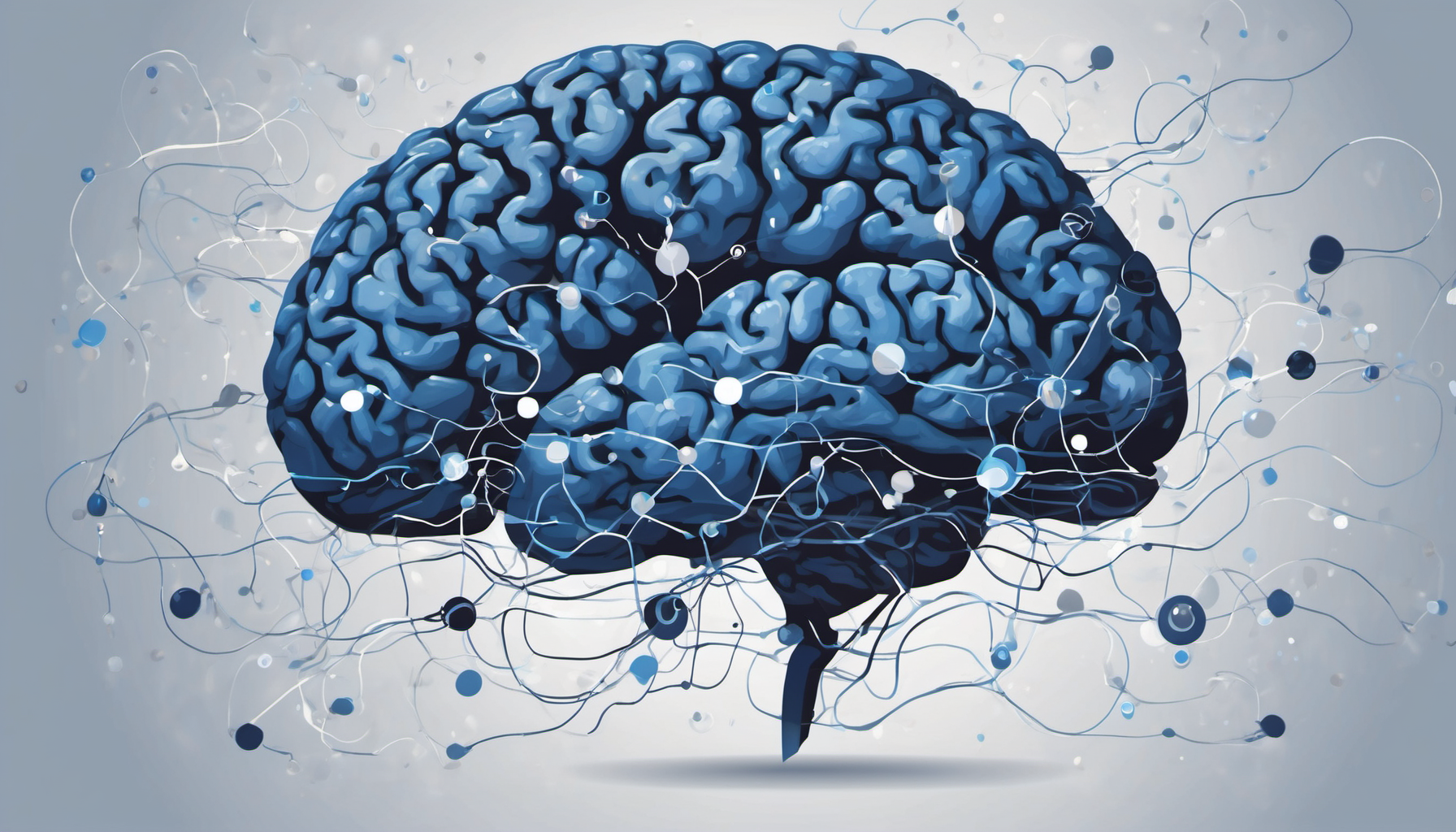
Key Discovery: How 'Body' and 'Society' Create Symbols
This extensive survey research has revealed three core principles that play a crucial role in the emergence of symbols within cognitive developmental systems.
First, the importance of 'Embodied Cognition'. This means that for an intelligent being, beyond merely processing data, interacting with the real world and experiencing it with one's own body plays a decisive role in forming symbols. For example, a baby's experience of grasping and shaking a toy, feeling its weight and texture, is essential for concretely forming the symbol 'toy'. The study emphasized, through numerous examples, that such 'body-mediated experience' firmly 'grounds' symbols.
Second, the power of 'Multimodal Integration'. When we perceive the world, we don't just see with our eyes; we also hear sounds with our ears, touch with our hands, and sometimes even smell. This research demonstrated that when intelligent systems simultaneously receive and integrate diverse sensory information—such as visual, auditory, and tactile—they can create much richer and more robust symbols. For instance, the symbol 'cup' is fully formed not just by its shape (visual), but also when integrated with the sound it makes when tapped (auditory) and the firmness felt when holding it (tactile).

Third, the indispensability of 'Social Interaction'. From birth, humans learn about the world by communicating with parents and those around them. They learn the names of objects through language and acquire social rules by imitating the behavior of others. This study emphasized that intelligent systems can also refine and expand symbols through interaction with other beings, especially linguistic exchange. In other words, a faster and deeper understanding can be achieved when exploring the world together rather than alone.
What Does This Mean for My Life?
While these research findings may seem complex, they actually offer very important implications for our daily lives and learning methods. They can be applied to busy professionals, learners eager to acquire new knowledge, and those seeking to look inward through meditation.
1. Deeper Understanding and Learning: This research scientifically supports that rather than merely reading information with your eyes, directly touching, experiencing with your body, and discussing related concepts with others is a far more effective learning method. For instance, when learning a new technology, it's crucial to write code or operate the device directly, rather than just delving into theory.
2. Emotional Regulation and Self-Understanding: During meditation or mindfulness, we practice 'observing and labeling' thoughts and emotions as they arise, 'without judgment'. For example, when the emotion 'anxiety' arises, the act of recognizing and naming that emotion as 'anxiety' is itself a process of forming a symbol. An emotion thus symbolized transforms from a vague fear into something we can understand and manage. This study suggests that such 'labeling' converts abstract experiences into concrete symbols, making them cognitively processable.
3. Survival Strategy in the Age of Information Overload: In an era overflowing with information, what's crucial is not remembering every piece of information, but the ability to extract and categorize core 'symbols'. This research offers insights into how we can more efficiently symbolize information and construct meaningful knowledge based on it. Practicing summarizing important information in your own way and explaining it with analogies helps cultivate symbol-forming abilities.
Exploring with LINK BAND
LINK BAND is a headband-type wearable device that simultaneously measures EEG (brainwaves), PPG (heart rate), and ACC (movement). While this device is not a direct experimental tool for symbol emergence research, it can provide crucial insights into understanding how the human brain forms and processes symbols, and furthermore, how to optimize our cognitive abilities.

For example, LINK BAND's EEG sensor can detect changes in brainwaves when we learn new information or solve complex problems. Certain brainwave patterns (e.g., gamma waves) are known to be associated with moments of integrating new concepts or gaining insights. How do brainwaves respond at the moment we grasp a concept with an 'Aha!' — that is, when abstract information solidifies into a concrete 'symbol'? LINK BAND can capture these subtle changes in brain activity in real-time, indirectly informing you when you were in an optimal learning state, or which information was more effectively imprinted in your brain.
Furthermore, the PPG sensor helps assess cognitive load by measuring heart rate changes due to stress or concentration during learning. The ACC sensor reminds us of the importance of 'embodied cognition,' where we experience the world through bodily movement. LINK BAND integrates these three data points, providing a foundation for a more holistic understanding of how your brain and body interact in the process of symbolizing and comprehending information.
In conclusion, LINK BAND can be a smart companion that monitors the amazing process of your brain understanding the world and creating symbols in real-time, thereby helping you enhance learning efficiency, manage stress, and optimize cognitive abilities.
Small Experiments You Can Try Starting Today
Based on the insights from this research, we suggest some small experiments you can apply to your life starting today.
1. Create Your Own 'Symbol Dictionary': When encountering new information or concepts, instead of just memorizing, try to summarize the core idea using your own language and analogies, creating 'your own symbols'. For example, create a drawing or a sentence that explains complex economic terms using your own everyday analogies. Through this process, the information will become a more robust symbol.
2. 'Experience and Explain with Your Body': When learning a new skill or hobby, instead of passively receiving information, physically touch it, move your body, and explain what you've learned to others. Just as a child learns spatial concepts by stacking blocks, your body-mediated experiences and social interactions will maximize learning effectiveness.
3. 'Emotion Labeling Practice': When feeling stress or anxiety, instead of avoiding or suppressing the emotion, pause and ask yourself, 'What emotion am I feeling right now?' and label that emotion. 'Ah, I'm feeling a bit of apprehension right now.' This practice of symbolizing emotions will help improve emotional regulation and deepen self-understanding.
Questions This Research Poses to You
The world is constantly changing and full of new information. How are you creating your own meaningful 'symbols' in this complex world? And how much are those symbols enriching your life? Take a moment to pause and reflect on the amazing ways your brain understands the world.
LINK BAND Insight
This research comprehensively illuminates how our brains and AI systems form meaningful 'symbols' from intricate sensory data. The study highlights that 'embodied experience,' 'multisensory integration,' and 'social interaction' are pivotal for the emergence of these symbols. This offers crucial insights into how we can more deeply understand information, effectively regulate emotions, and navigate the challenges of an information-overloaded era with wisdom. Ultimately, technologies such as LINK BAND can serve as invaluable tools for monitoring these cognitive processes, thereby enhancing our learning and self-understanding.
Related Articles

Train Your Brain Like a Muscle: What a 534-Citation Neuroscience Review Reveals About EEG Neurofeedback
The moment you open your eyes in the morning, smartphone notifications pour in. Work emails, KakaoTalk, Instagram alerts, news headlines… Your brain is bombarded with information as soon as you wake up. You sip your coffee and get ready for work, but your mind is already full of tangled thoughts. “I need to nail that presentation at today’s meeting…,” “I can’t focus—probably because I worked late last night.” Have you ever had this experience? Every day, we make countless decisions, process information, and regulate emotions. But how often do we actually check whether our brain is in optimal condition? What if we could train our brain, just as athletes train their muscles? To find answers to this question, neuroscientists around the world have been researching for decades. And one powerful tool that has emerged is EEG neurofeedback. Today, I want to introduce you to an influential review paper published in *Neuroscience and Biobehavioral Reviews*, cited 534 times. This paper goes beyond simply explaining brainwaves—it uses meta-analysis to examine specific protocols that can actually improve cognitive abilities and emotional states in healthy individuals. Let’s explore the scientific method that can upgrade your daily performance.

L-FAME: Longitudinal Focused Attention Meditation EEG Dataset and Benchmark
The world's largest meditation EEG dataset, collected from 103 participants across more than 70 meditation sessions, has been released. We explore how brainwaves change during meditation, what the increase in alpha and theta waves signifies, and how LINK BAND connects to this groundbreaking research.
FADL:Federated-Autonomous Deep Learning for Distributed Electronic Health Record
How secure is your health data? Imagine sensitive information like sleep patterns, heart rate, and brainwaves being collected on a central server for AI analysis. The research we're highlighting today introduces an innovative technology called 'Federated Autonomous Deep Learning (FADL).' This approach allows AI to be trained directly on your own device, sharing only the learned knowledge, thus eliminating concerns about personal data breaches. FADL paves the way for future wearable devices to offer highly personalized health management while rigorously protecting individual privacy.
Experience LINK BAND 2.0
Measure your brainwaves in real-time with integrated EEG, PPG, and ACC sensors. See for yourself what you read about today.
View Product→